
Introduction
Scrolling through hundreds of beautiful villa listings, each promising paradise, can turn excitement into overwhelm faster than you can say “infinity pool.” Every property looks amazing in professional photos, every description uses words like “luxurious” and “tranquil,” and every review seems to confirm you’ve found the perfect place—until you move on to the next listing and start to doubt everything again.
There are a lot of amazing villas in Bali, but “perfect” means different things to different people. For example, honeymooners looking for a romantic getaway, families needing kid-friendly spaces, digital nomads needing reliable workspaces, or groups of friends planning a celebration getaway. Finding the right villa for you isn’t about finding the best one on paper. It’s about finding the one that fits your travel style, group dynamics, budget, and what you really want to get out of your trip to Bali.
Begin with an Honest Self-Evaluation
When you travel with toddlers, pool safety, ground-floor bedrooms, and being close to family-friendly beaches are much more important than trendy beach clubs or views of rice fields. When families with people from different generations go on vacation together, they need enough bathrooms to avoid morning traffic jams, big communal areas for group meals, and maybe even separate pavilions for privacy. When friends go on vacation together, they might want to stay in places with lots of entertainment, close to nightlife, and outdoor areas where they can enjoy cocktails at sunset.
Your travel style affects everything, from where you stay to what you can do there. Do you want to see a lot of Bali and only use the villa for sleeping and breakfast? A smaller house in a central location might be better for you than a big estate that takes 45 minutes to drive to attractions. On the other hand, if your idea of a perfect vacation includes lazy days by the pool, spa treatments, and dinners made by a private chef, it makes perfect sense to buy a great property with high-end amenities, even if it’s farther away.
The reason for your trip affects small things that end up being very important to your happiness. Honeymooners care more about privacy, romance, and adult-only spaces than about family-friendly features. Work-leisure combinations need workspaces that really work, with reliable internet. A pretty desk in the corner that looks good in photos but is in the loudest part of the villa won’t do.
Figuring Out Bali’s Location Personalities
Each part of Bali has its own personality, so it’s important to find the right area that fits your needs as well as the villa itself. The island is small enough that you can get to everything, but a daily 90-minute round trip to your favorite activities will make your vacation less enjoyable faster than you think.
Seminyak
Seminyak has a sophisticated urban beach culture with designer shops, world-class restaurants, and beach clubs that make the area feel cosmopolitan. The area is great for travellers who want resort-town style, easy access to high-end shopping and dining, beautiful beaches nearby, and the ability to walk to cafes and services. The villas here range from modern, minimalist compounds to traditional Balinese estates. Traffic can be heavy, especially during peak season, but the convenience makes up for the density.
Canggu
Canggu has changed from a surf village to the capital of digital nomads, but it still has a more relaxed vibe than Seminyak. The views of the rice fields and the beach access are great, and the cafe culture is in line with healthy eating trends. The scene is more laid-back and younger. Villas in Seminyak often give you more space for your money than villas in other areas. The rice field setting makes the area calm even though it’s close to activity. Canggu is a good place for travelers who want to see the trendy side of Bali without the craziness of Seminyak.
Ubud
Ubud is the spiritual and cultural heart of Bali. It has a very different energy than the beach areas because of its jungle settings, terraced rice paddies, and focus on wellness. Temple visits, traditional dance shows, art markets, yoga studios, and farm-to-table meals fill the days. The villas here focus on connecting with nature through views of the jungle, outdoor living spaces, and blending in with the landscape. Ubud is a great place for travelers who want to learn about the culture, do wellness activities, and enjoy cooler weather instead of spending time on the beach.
Uluwantu
The Bukit Peninsula and Uluwatu have stunning ocean views, world-class surf breaks, and dramatic cliff-top settings. The area feels more like a resort and less like a regular neighbourhood. The beaches are beautiful and less crowded, but you have to climb down cliffs to get to them. Villas with views of the cliffs cost a lot, but they really do have amazing settings. This area is great for people who want fancy beach clubs, romantic dinners on the cliffs, and amazing sunsets, and who don’t mind being farther away from Bali’s cultural attractions.
Sanur
Sanur has beaches that are good for families, with calm water, a slower pace than Seminyak, and easier access to attractions on the island. Villas in this area often offer better value than those in more fashionable areas while still being high quality. Families with young kids, older travelers who like calmer energy, and people who want to be near the beach without the party scene will love Sanur.
Key Features That Make Up Experience
Once you’ve found the perfect area, look at the villa features that make a good stay great. Some things are important to everyone, while others depend on what you need.
The layout of the bedroom and bathroom affects daily comfort more than the fancy common areas. Make sure there are enough ensuite bathrooms. Sharing bathrooms can get uncomfortable very quickly, even with close friends. Check the locations of bedrooms for families with kids who need to be close by and groups of friends who want privacy. If you have young kids or trouble getting around, ground-floor bedrooms are very important. Most travelers won’t stay anywhere without air conditioning in all of the bedrooms, no matter how romanticized photos of breezy tropical pavilions make it sound.
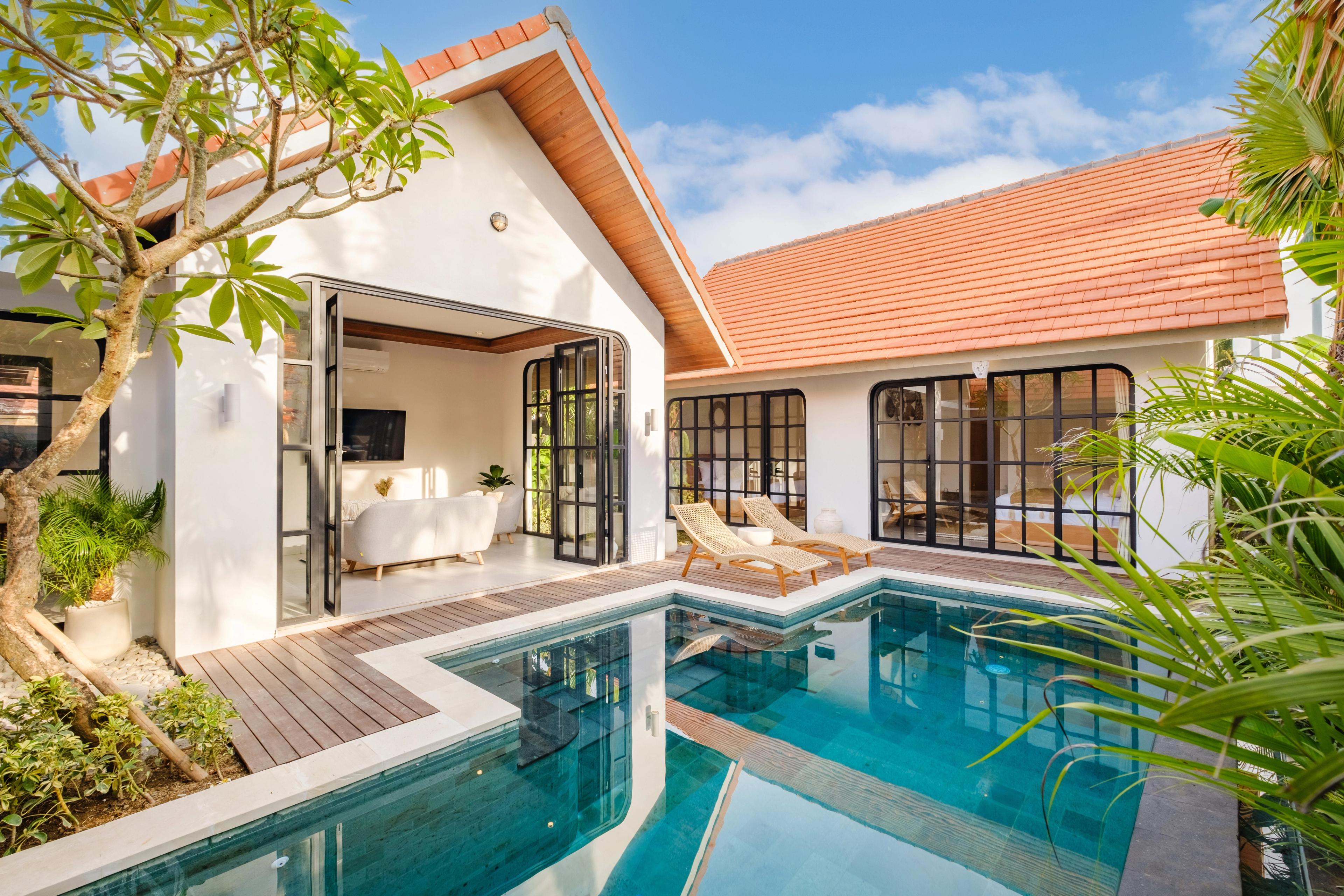
The quality and placement of the pool should be looked at very closely. The beautiful infinity pool in the listing photos could be just right, or it could be small, in the full sun with no shade options, not have any shallow areas for kids, or look out over a construction site that the photos carefully cut out. Video tours show the pool’s surroundings better than still pictures do. Think about whether you want views of the ocean, rice fields, a private garden, or being close to outdoor living areas. Families need to take pool safety very seriously. Pools that aren’t fenced in and are on the edge of a cliff might look great, but they make it hard to keep an eye on young kids all the time.
The kitchen affects the rhythm and budget of a vacation a lot. If you want to save money by cooking a lot at home or because of dietary restrictions, you need kitchens that work well and have good tools, not just pretty kitchenettes with a hot plate and a mini-fridge. But if you eat out most of your meals, the size of the kitchen doesn’t matter and shouldn’t be a factor in your choice of property. Many high-end villas offer private chef services for a reasonable price. This is often a better deal than going grocery shopping and cooking for yourself while on vacation.
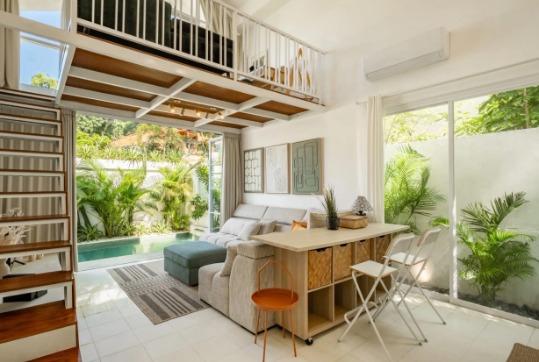
Living and entertainment areas shape life in a villa every day. Pavilions outside look great, but during the rainy season, you need indoor spaces with air conditioning that don’t feel like they were added later. For groups, having more than one seating area keeps everyone from being crammed into one area. For villa-centric stays, entertainment options like sound systems, projectors, and games are more important than for explore-Bali itineraries. Digital nomads and people who work while on vacation need dedicated workspaces with fast internet.
Outdoor spaces are often what make or break a stay at a tropical villa. Covered terraces that keep you dry and in the shade greatly increase the amount of time you can spend outside. Eating outside makes for memorable meals. The size of the garden and how well it is taken care of can change the mood. A garden that isn’t taken care of makes the villa feel sad, no matter how nice it is inside. Privacy from neighbours is important if you like quiet or just want to swim without anyone watching.
Reading Between the Lines of the Listing
Villa listings show properties in the best light possible, which is expected. However, learning how to get accurate information from marketing language can help you avoid unpleasant surprises.
Professional photos can make small spaces look big and remote places look like they’re in the middle of everything. If you never see wide shots of bedrooms or bathrooms, they might be small rooms. If you see the same area from a lot of different angles with no change in space, it means there isn’t much space. Not having photos of the neighborhood could mean that the area isn’t very nice. Video tours give you a better idea of how things are laid out than curated photo galleries do.
You need to think about location descriptions. “Quiet and private” could mean being far away from other people or being in a beautiful, secluded area that requires a 45-minute drive to get to restaurants. “Close to everything” could mean that it’s easy to get to on foot or that it’s not in the middle of nowhere. Don’t trust claims about distances; use Google Maps to check them out. When there is traffic, ten minutes on a scooter turns into thirty minutes in a car. “Rice field views” could be wide-open spaces or small openings between buildings. Reviews often do a better job of explaining what a place is really like than descriptions do.
You need to check the claims about amenities. “Fully equipped kitchen” can mean anything from a kitchen that is ready for a professional chef to a college dorm kitchen that is very basic. “High-speed internet” could mean real fiber optic or 4G which works sometimes but drops out during video calls. “Air conditioning” can mean just a few rooms, not the whole house. Don’t make assumptions; instead, ask specific questions about the things that are important to your trip.
The staff and services that are included can be very different, which has a big effect on the experience. Some villas have daily cleaning, pool maintenance, and management that can help with concierge services. Some only offer a first cleaning and let owners reach them by WhatsApp in case of an emergency. Know exactly what is included in your rate and what costs more. Private chef and spa services sound fancy, but when you find out that the villa doesn’t have them, you realize that you have to pay extra for them like you would anywhere else.
The Strength of New, In-Depth Reviews
Reviews are the best way to find out what it’s really like to stay at a property. Reviews from the last few months are much more important than reviews from three years ago. Changes in management, maintenance problems, and neighborhood growth all have a big impact on experiences.
Find reviewers whose travel style is similar to yours. If you’re a digital nomad travelling alone and talking about how reliable the wifi is and how well the workspace works, that’s useful information. But if you’re a family with toddlers who need to know about pool safety, that’s not useful information. If a lot of families talk about how kid-friendly a property is, that means it really is. But if a property only has a couple of reviews, it might not be good for kids even though it says it is.
Read all of the reviews, but pay the most attention to the ones in the middle. People who give five-star reviews may have different standards than you or have been given special treatment. Sometimes, one-star reviews show that the reviewer has unreasonable expectations or personal problems. Three- and four-star reviews often give the most balanced and useful information about real strengths and weaknesses.
Keep an eye on how management responds to reviews, especially bad ones. Management that cares about guest experience and fixes problems will respond to criticism in a professional and helpful way. If people are defensive or don’t respond at all, it means that fixing the problems is unlikely. What happens if you have problems during your stay depends on how management handles complaints.
Things to think about when making a reservation
Once you’ve found some potential properties, a number of practical factors will affect your final choice and when you book.
Smart travelers can take advantage of Bali’s clear seasonal pricing patterns. The busiest times of year are July and August and December and January. Prices go up by 50% to 100% compared to the rest of the year, and there aren’t as many rooms available. April to June and September to November are the best times to visit because the weather is nice, there aren’t too many people, and the prices are fair. February to March and October to November are the best months to go because they are less busy and cost less, but it is more likely to rain. If you know these patterns, you can decide whether the extra costs of traveling during peak season are worth it or if changing your travel dates will save you a lot of money without losing out on the experience.
Different properties and times of year have different minimum night requirements. A lot of villas require guests to stay for at least 3 to 5 nights all year round, and 7 to 14 nights during busy holiday times. Sometimes, travelers who are on a budget can get better rates per night if they stay longer. Before you book, make sure you know the cancellation policies. Being flexible costs more, but it gives you peace of mind if your plans change. As prices and booking commitments go up, travel insurance becomes more and more useful.
There are pros and cons to both direct bookings and platform reservations. Airbnb and Vrbo are booking sites that protect payments, have standard cancellation policies, and have review systems. However, they also charge service fees that raise the total cost. When you book directly through a property management company, you can often save money while still getting professional service and guest protections. But make sure that direct bookings are made through real management companies with clear contracts, not informal deals that leave you open to problems.
Things to Watch Out For
Some warning signs suggest that you should look at other properties, even if the listing looks great.
Usually, if a property is priced too low compared to similar ones, it means that it has problems, like being in a bad location, not being maintained, not having basic amenities, or not matching the photos. There are real deals out there, especially during the off-season or for newer properties that are trying to get more reviews. But if a property is priced way too low, you should be very careful when reading reviews.
If a property has been listed for years and has few or no reviews, it could mean that there are few bookings, which could mean that there are problems, or that the reviews were manipulated if they suddenly appeared recently. If the property is new, you may be taking a chance on its quality. New properties can sometimes be a great deal while they build their reputations, but not getting feedback from guests makes things less certain.
If you don’t communicate well during the inquiry and booking process, you probably won’t communicate well during your stay. Management that won’t suddenly become responsive and helpful once they have your money is indicated by slow responses, vague answers to specific questions, a refusal to provide more photos or information, or pressure to book right away without time for due diligence.
Not having clear cancellation policies, not being willing to send formal booking confirmations, asking for payment outside of standard platforms without clear contracts, and not being able to prove property ownership or management legitimacy are all big red flags that you should walk away from.
Deciding What to Do
Sometimes, even after you’ve narrowed it down to your top choices, the choice still isn’t clear. A few last things to think about can help you make a decision or clear things up.
Trust your gut about how it feels to talk to management. Management that is responsive, helpful, and excited about their work and answers all of your questions thoroughly often means that you will get the same level of service during your stay. Minimal communication and transactions could mean that you’re just a booking number and not a valued guest.
Look at the whole value equation, not just the price per night. A villa that costs $100 more per night but comes with daily cleaning, better amenities, a better location, and management that is quick to respond is often a better deal than cheaper options that require constant problem-solving and compromises. Add up the costs of your vacation, including activities, meals, and transportation. The difference in villa prices is often only a small percentage of the total cost.
If you’re going to be somewhere for a long time or it’s a special occasion, spending more than you normally would on quality is often worth it. You should expect great service and settings for your honeymoon, big anniversary, or family reunion that only happens once every ten years. The memory of a great property lasts long after the extra cost is gone.
Conclusion – Your Unforgettable Trip Is Waiting
Ready to experience Bali?
52 luxury villas. Best rate guaranteed. Free beach club access when you book direct.
BOOK →To find the right Bali villa for you, you need to balance research with gut feelings. The property that looks great on paper but doesn’t excite you probably won’t give you great vacation memories. On the other hand, falling for beautiful pictures without checking to see if they fit in real life can lead to disappointment when reality doesn’t match fantasy.
The perfect villa is one that is in a location that fits your Bali experience goals, has features that meet your group’s needs, is of high quality and fits your budget, and has management that shows they really care about making sure you have a great stay. This mix makes for unforgettable vacations, where the villa itself becomes a part of the memories instead of just a place to stay.
Bali’s amazing villa landscape is perfect for almost every traveler. You just need to know what perfect looks like for you, ask the right questions, read between the lines of the marketing, and trust that taking the time to make the right choice will make your vacation more enjoyable.