Introduction
There is a version of a wellness festival that feels like an expensive queue — waiting for the masterclass, waiting for the workshop, watching a livestream of yourself watching a livestream. And then there is Bali Spirit Festival, which has been doing something genuinely different from the centre of Ubud since 2008, and which in its seventeenth edition in April 2026 carries the kind of institutional depth that most wellness events spend decades trying to build.
The question serious practitioners are right to ask is not whether it looks impressive on paper — it does — but whether the experience actually delivers. Whether it's the rare combination of context, community, and transformational design that justifies flying across the world and blocking out a week of your life for it. This is an attempt to answer that honestly.
What Bali Spirit Festival Actually Is — and Why the Setting Is Half the Experience
Ready to experience Bali?
52 luxury villas. Best rate guaranteed. Free beach club access when you book direct.
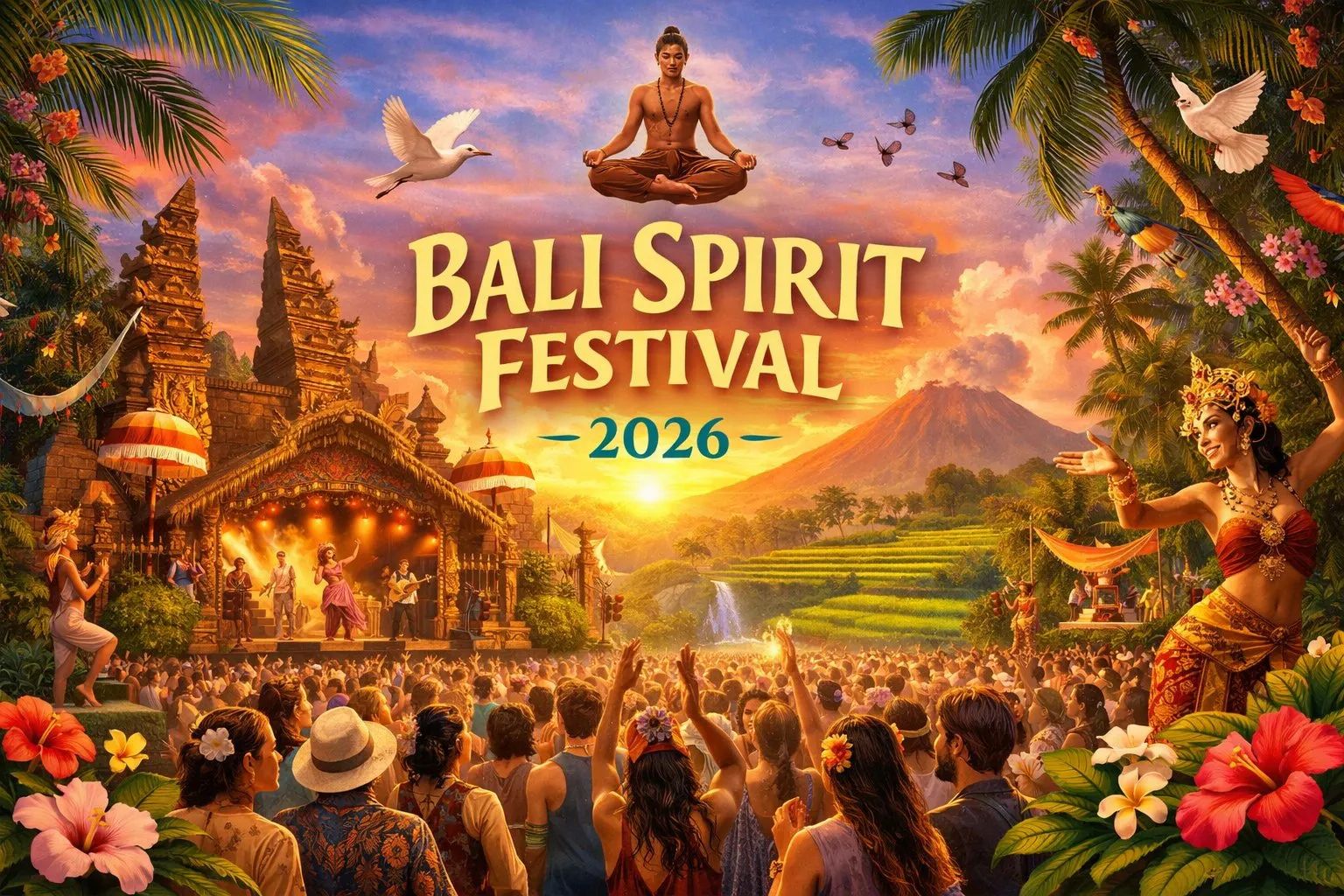
BOOK →The Bali Spirit Festival is a five-day gathering held annually in Ubud — Bali's cultural and spiritual heartland — that brings together yoga, dance, music, healing arts, meditation, martial arts, and personal development into a single container. Now in its 17th edition, the 2026 festival runs from April 15 to 19 at two interconnected venues: The Yoga Barn, one of Asia's most respected centres for wellness and conscious movement, and the neighbouring Puri Padi Hotel, which adds outdoor stages, gardens, and a pool to the festival footprint.
The participant numbers give a sense of scale: approximately 5,000 attendees from over 50 countries at recent editions — not so large that the experience becomes anonymous, not so small that the energy of a genuinely global gathering is lost. The mix of practitioners, musicians, teachers, healers, and first-timers creates a social fabric that most single-discipline retreats cannot replicate. You will practise yoga beside someone who has been doing this for thirty years, and someone who arrived having barely done it at all, and the atmosphere accommodates both without either feeling out of place.
The 2026 edition carries the theme 'Welcome Home' — a deliberately internal phrase that positions the festival not as an external event to attend but as a return to something within yourself. It is a theme that makes more sense on day three of the festival than it does in the marketing copy, which is itself significant: Bali Spirit earns its philosophy rather than just asserting it.
Insider note: the festival opens on April 15 with a Free Community Party from 5 PM, and April 16 is a full Free Community Day from 7 AM — both days open to anyone without a pass. This is worth knowing if you are in Ubud and want to experience the atmosphere before committing to a full-access pass, or if you want to extend your stay and use the free days as bookends to the ticketed programme.
The Programme: What You Are Actually Choosing Between Each Day
The structural design of the Bali Spirit Festival is one of the things that distinguishes it from both a standard retreat (which gives you a fixed programme) and a conventional music festival (which gives you a concert list). Each day unfolds across multiple stages, spaces, and formats simultaneously — which means you are always choosing between things, always guided by what your body and attention call for, rather than progressing through a fixed schedule.
The daytime programme across the full-access days (April 17–19) runs from early morning through late afternoon across multiple disciplines:
- Yoga classes spanning all major traditions — Vinyasa, Ashtanga, Yin, Restorative, Kundalini — taught by both internationally known teachers and respected local practitioners
- Dance and movement: ecstatic dance, 5Rhythms, Biodanza, contact improvisation, and traditional Balinese movement forms
- Meditation: guided sessions, silent sits, mindfulness practices, and movement-based meditation forms
- Sound healing: gong baths, crystal bowls, mantra and kirtan, overtone singing
- Martial arts: workshops in Qi Gong, Tai Chi, and related movement disciplines
- Healing arts: breathwork, bodywork modalities, plant medicine education, and personal development workshops
- Cultural programming: Balinese ceremony, sacred ritual, and cultural education sessions that situate the festival within the living spiritual tradition of its host island
The evening programme shifts register entirely. From late afternoon through midnight, the festival becomes a Bhakti music and ecstatic celebration — live concerts across multiple stages featuring a music lineup described as 'ceremonialists and soul-healers, sound alchemists and truth-speakers.' The musical vision is explicit: to create a more connected and intimate concert experience that generates genuine heart-centred presence rather than passive audience spectatorship. The distinction between performer and participant is deliberately blurred.
By the second evening, the line between the yoga session and the concert has dissolved — because both are the same thing, approached through a different door.
Beyond the formal programme, the festival grounds include the Dharma Fair Market — a curated marketplace of conscious brands, Balinese artisan crafts, and wellness products — the Peace Garden for integration and reflection between sessions, and a children's activity zone that makes the festival genuinely family-accessible. The Spirit Pools at The Yoga Barn offer between-session recovery; the on-site café stays open throughout.
Why Ubud: How the Setting Does Work That a Festival Venue Alone Cannot
The Bali Spirit Festival's relationship with Ubud is not incidental. The festival was founded with the explicit intent of situating this kind of gathering within a place where the spiritual and cultural context is genuinely alive rather than borrowed, and Ubud, as Bali's acknowledged ceremonial and artistic heart, provides that context more authentically than any other location in Southeast Asia.
This is a town where the morning begins before dawn with the sound of temple bells and the smell of incense from household offerings placed at street-level shrines. Where a gamelan ensemble might rehearse in a banjar courtyard twenty metres from where you're having breakfast. Where the green of the rice terraces pressing against the edges of the town is not a view but a working agricultural landscape that has been continuously farmed for over a thousand years. The spiritual atmosphere of the place is not curated for visitors — it is simply how Ubud functions, and the festival draws on it directly.
This contextual depth is what separates the Bali Spirit Festival experience from the Bali yoga festival category more broadly. Other events offer comparable programming in impressive facilities. Very few offer the experience of attending a morning yoga class and then walking out onto a street where a procession of Balinese women carrying offerings to a temple passes without interrupting its own rhythm. The festival and the place are in genuine dialogue.
Insider note: the area around The Yoga Barn and Puri Padi is the heart of Ubud town — walkable to the Palace, the Monkey Forest, the main market, and several of the town's best restaurants. The festival organisers recommend staying within walking distance rather than driving, given Ubud's traffic during the festival period. Private villas in the Penestanan, Sambahan, or Sayan neighbourhoods — all within a short walk or ten-minute drive of the venues — offer the best combination of proximity and genuine seclusion.
What Distinguishes Bali Spirit From the Global Wellness Festival Market
The global wellness retreat and transformational festival market has grown dramatically in the past decade. There are now credible events on every inhabited continent, and the production values and teacher lineups across the category have risen significantly. Against that backdrop, what specifically makes Bali Spirit 2026 worth the journey from Sydney, London, or Los Angeles?
Seventeen years of institutional depth:
Most wellness festivals have founders who are still figuring out what they are. Bali Spirit has seventeen editions of accumulated learning about what works — in programming, in community management, in the integration of Balinese culture as a living participant rather than a backdrop. This shows in the quality of the teacher relationships (many have returned year after year), the design of the physical space, and the culture of the community that has grown around the event.
The Tri Hita Karana philosophy:
The festival's explicit organisational philosophy is drawn from the Balinese Hindu concept of Tri Hita Karana — living in harmony with one's spiritual, social, and natural environments. This is not a borrowed aesthetic. It is a functional design principle that shapes how the programming is constructed, how the community is managed, and how the festival relates to its host culture. Bali Spirit contributes financially and logistically to local Balinese charities, with a specific focus on children's programmes — the connection to the local community is real, not symbolic.
The integration of sacred and celebratory:
The combination of rigorous daytime practice with genuinely ecstatic evening celebration is harder to execute well than it sounds. Many wellness events either lean too far into the serious (where the evenings become additional workshops) or too far into the celebratory (where the daytime practice feels like preparation for a party). Bali Spirit has refined the rhythm of this arc across seventeen editions to the point where participants often describe the experience as the most integrated week of their year — genuinely transformative in the daytime, genuinely joyful in the evening, and rested enough through it all to sustain both.
The community dimension:
The Bali Spirit community has become, over seventeen years, something with its own continuity between festivals — an ongoing connection between participants who might otherwise be strangers but share a common reference point. For first-timers, the ease of arriving in this already-formed community is one of the most surprising aspects of the experience. For returning participants, the sense of reunion that the 'Welcome Home' theme is invoking is entirely literal.
The Practical Guide: Tickets, Timing, and How to Plan the Week
The Bali Spirit Festival 2026 runs April 15–19, with the ticketed programme across April 17–19. Passes start at USD 550 for full access across the three paid days, with music-only options available. The free community events on April 15 and 16 are open without a pass. Full-access passes include entrance to all three stages, the Grove Stage, Tea Temple and Spirit Pools, the Peace Garden, the Dharma Fair Market, and any night-time workshops and seminars.
Dates
April 15–19, 2026 (5 nights, 4 days)
Free community events
April 15 from 5 PM (Community Party) and all day April 16 from 7 AM (Community Day) — no ticket required
Ticketed programme
April 17–19: Full Access passes and Music Only passes available
Ticket price (full access)
From USD 550 — confirm current pricing at balispiritfestival.com
Venues
The Yoga Barn and Puri Padi Hotel, central Ubud
Travel from Denpasar airport
Approximately 90 minutes by car
Recommended accommodation
Within walking distance of The Yoga Barn — Ubud centre or the immediately surrounding neighbourhoods
What to bring
Yoga mat, refillable water bottle, sunscreen, swimwear (pool on-site), extra layers for evenings, comfortable movement clothes
Planning advice worth knowing before you book: April in Bali sits at the very beginning of the dry season transition, which means the weather is predominantly warm and clear with occasional brief afternoon showers — ideal conditions for the outdoor elements of the festival. The festival period overlaps with one of Bali's best months for travel, so accommodation in central Ubud will be competitive during that week. Booking your villa or accommodation as early as possible after confirming your festival pass is strongly recommended.
The festival organisers specifically advise against driving to the venue during the festival, citing Ubud's traffic as a significant constraint. Festival shuttles run from Central Parking at Monkey Forest. For guests staying within 10–15 minutes of the venues, walking is both practical and part of the experience — moving through Ubud's streets in the early morning, past offerings being placed at shrines, before a sunrise yoga session is a Balinese moment that no shuttle bus delivers.
Planning the Week Around It: Before, During, and After the Festival
Most participants at Bali Spirit who have attended before do not arrive in Ubud on April 15 and leave on April 20. They build a trip around the festival — arriving days or even a week earlier to settle into Bali's rhythm, acclimatise to the time zone, and begin the deceleration that the festival's intensity rewards. The experience of arriving at Bali Spirit, already several days into Bali, is categorically different from arriving straight from an international flight.
A thoughtfully planned spiritual retreat in Bali, around the festival, might look like this:
- Days 1–3: arrival in South Bali (Seminyak or Canggu), private villa, unhurried adjustment — pool days, early morning walks, gradual decompression from the travel and the working life that precedes it
- Days 4–5: move to Ubud — explore the town, attend some of the preliminary events at The Yoga Barn that BaliSpirit and the venue run in the weeks surrounding the festival, begin orienting to the space
- Days 6–10: the festival itself — full immersion across the five days, with a private villa nearby to return to each evening rather than staying on-site
- Days 11–14: post-festival integration — this period is undervalued by first-timers and described as essential by returning participants. The days after Bali Spirit need space; returning directly to ordinary life without transition is, almost universally, described as a mistake. Three or four more Ubud or South Bali days of quiet, walks, and reflection make the whole experience land differently.
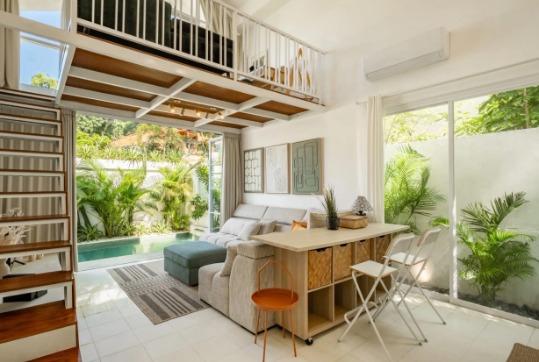
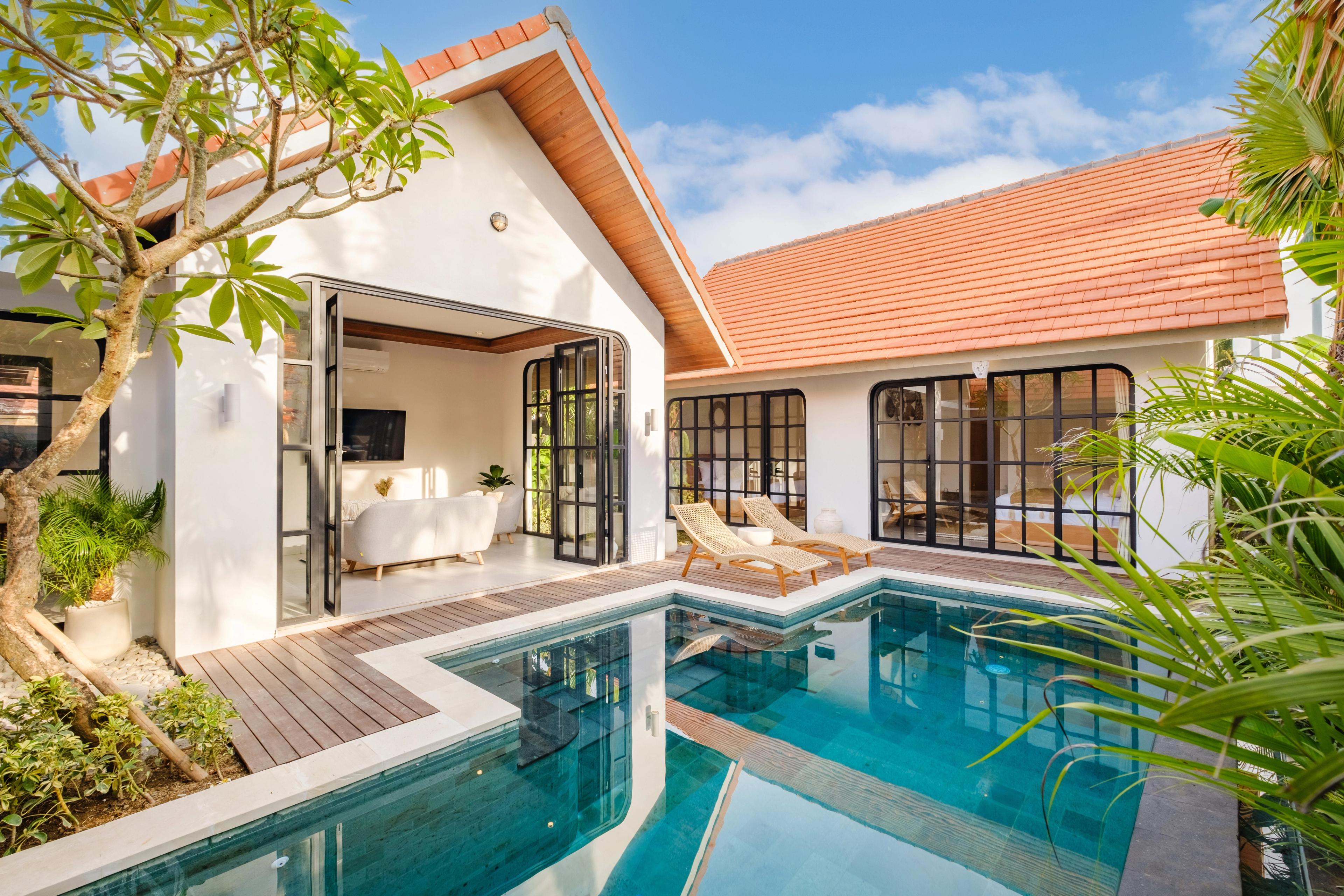
The after-festival integration dimension is particularly relevant for the private villa argument. Returning each evening during the festival to your own pool, your own quiet space, your own garden — rather than to a shared hotel or guesthouse common area — creates the containment that lets the day's experiences settle rather than dissipate. And the post-festival days in a private villa, where you set the pace entirely, are qualitatively different from any other form of accommodation.
An Honest Assessment: Who Bali Spirit Is For — and Who Should Probably Pass
A genuine feature of Bali Spirit Festival is that it is not for everyone, and acknowledging this is part of what makes it valuable for the people it is for.
Bali Spirit is worth building a trip around if:
- Your practice — yoga, meditation, dance, sound, or some combination — is a serious and ongoing part of your life rather than something you return to on holiday
- You are interested in Balinese culture and spirituality as a living tradition rather than an aesthetic, and want to engage with it at a level the standard tourist itinerary doesn't reach
- You find the combination of daytime discipline and evening celebration compelling rather than contradictory — you are genuinely curious about what happens to your practice when music and community are added to it
- You are open to a schedule built around your own instincts rather than a fixed programme — the abundance of choice is a feature for self-directed people and overwhelming for those who want to be guided through a curated curriculum
- You want to travel within a community of global seekers rather than simply attend an event — the social dimension of Bali Spirit is significant and unavoidable
Bali Spirit may not be right for you if:
- You are new to yoga or meditation and feel uncertain in open-format settings — the festival is more rewarding for those who bring an existing practice than those who are beginning one
- You want a private, one-on-one retreat experience with a specific teacher or modality — the group energy is the point, and it is intense and all-encompassing
- You are planning the trip primarily around the music festival elements without interest in the daytime programming — the music-only pass exists for this, but the most meaningful experiences tend to emerge from the interplay of both
The people who get the most from Bali Spirit are the ones who come with a practice, show up fully, and let the week do what it has been doing to people for seventeen years.
What You Come Home With
The Bali Spirit Festival is one of a very small number of travel experiences that participants describe not as something they went to but as something that happened to them. The combination of context — Ubud's living spiritual atmosphere, the Balinese ceremonial calendar that runs alongside and occasionally through the festival, the specific quality of the late afternoon light over the rice terraces — with the depth of the programming and the accumulated wisdom of seventeen years of community building, creates something that most wellness events are still trying to approximate.
Whether it is worth building your entire Bali trip around depends on whether the experience described here is the kind you travel for. If it is, April 15–19, 2026, is the answer to when.
OriVista manages private pool villas in and around Ubud and across Bali's most sought-after areas — including properties close enough to The Yoga Barn for a pre-dawn walk to morning sessions, and private enough to offer the quiet integration space that makes a Bali Spirit week genuinely transformational rather than just intense. Explore OriVista villas near Ubud for a Bali Spirit trip. If you're planning your 2026 Bali trip around the festival, we'd love to help you find the villa that completes it.