Introduction
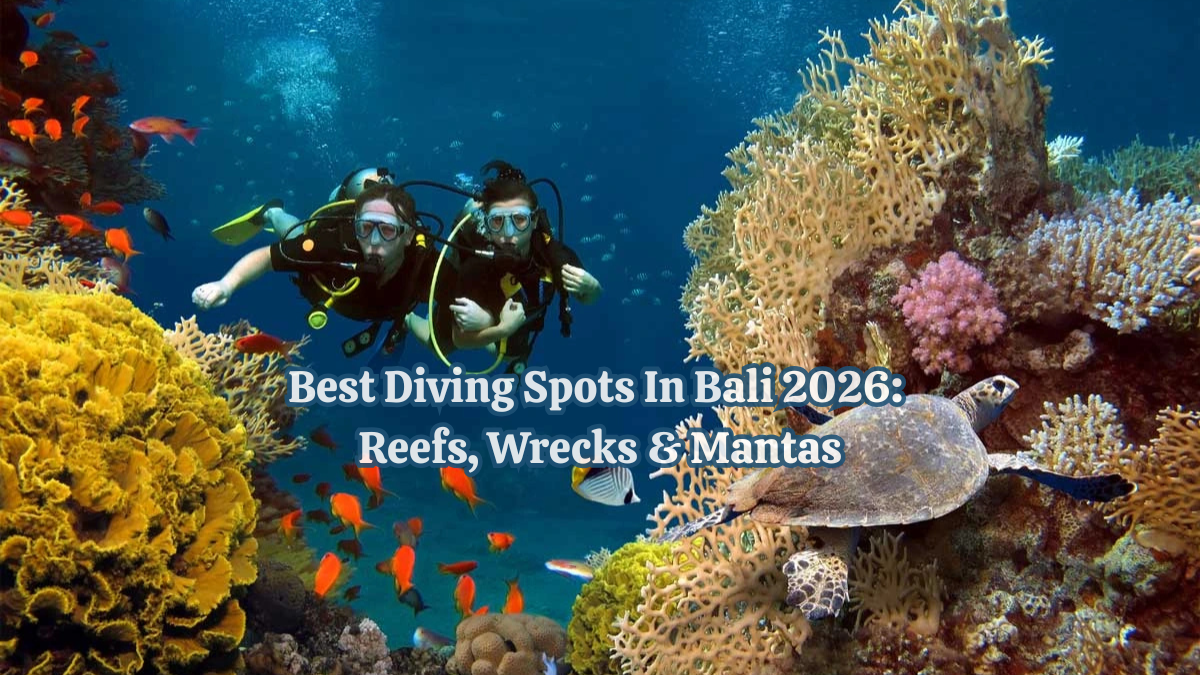
There is a specific quality to the moment before a Bali dive when you are hanging at the surface over a coral wall, looking down into blue water that drops a hundred metres below you, and the current is starting to pull. You have been briefed, your gear is correct, your buddy is beside you, and the thing below you — the USAT Liberty wreck in Tulamben, the manta cleaning station at Manta Bay, the cathedral of soft coral at Menjangan — is waiting exactly as described. Bali diving is one of the world's genuinely extraordinary underwater experiences, and it is available to divers from beginner to advanced in a single destination.
This Bali diving guide 2026 covers the specific sites, skill levels, conditions, and seasonal windows that determine whether your dive trip to Bali produces those moments or produces a pleasant but generic experience that could have happened anywhere warm. The four main areas — Tulamben, Amed, Nusa Penida, Menjangan — each have a distinct character, depth profile, marine life profile, and difficulty level. Knowing which one you are ready for, and when to go, is the difference between a dive trip and the dive trip.
Bali Dive Sites at a Glance: Which Area Is Right for Your Level and Objectives
Ready to experience Bali?
52 luxury villas. Best rate guaranteed. Free beach club access when you book direct.
BOOK →| Area | Key sites |
|---|---|
| Tulamben (northeast Bali) | USAT Liberty wreck, Drop Off, Coral Garden, Tulamben Slopes |
| Amed (northeast Bali) | Japanese Wreck, Jemeluk Bay, Pyramids, Amed Wall |
| Nusa Penida / Lembongan | Manta Point, Crystal Bay, SD Point, Gamat Bay, Toyapakeh |
| Menjangan Island (northwest Bali) | East Side, West Side, Garden Eel, Bat Cave, Anchor Wreck |
Tulamben Diving Bali: The Wreck That Built the Island's Diving Reputation
USAT Liberty Wreck, Tulamben—The most dived wreck in Asia
The USAT Liberty was a US Army cargo ship torpedoed by a Japanese submarine in January 1942, beached at Tulamben, and pushed into the water by a volcanic eruption in 1963. In the six decades since, it has been colonised by approximately 400 species of fish and coral — a single-site marine ecosystem of extraordinary density. The wreck begins at 5 metres and descends to 30 metres, making it accessible to open-water divers and genuinely interesting to advanced divers in the same dive. The torpedo hole, the propeller, the holds, and the encrusted superstructure each have their own character.
The dive that experienced divers describe as the best version of the Liberty: arriving at dawn, entering the water before 7 AM when the day boats have not yet arrived and the visibility — 15–25 metres on a good morning — is undisturbed by diver exhaust. The schools of bumphead parrotfish that cruise the wreck at dawn are among the most impressive large-fish encounters available in Bali, and they disappear as the day heats up and the site crowds. This is the dive that rewards early morning logistics.
Best time of year: April–November for the clearest visibility. The wreck dives year-round but southeast trade winds can create choppy surface conditions May–August; generally manageable. Tulamben is a black sand beach area, which means the water visibility is dependent on how much sand is in suspension — calm mornings produce the best conditions.
Drop Off, Tulamben— The wall dive alongside the wreck
Fifty metres from the Liberty, and equally underappreciated by divers who spend their entire Tulamben time on the wreck. The Drop Off is a coral wall that begins at 3 metres and drops vertically to 60+ metres, covered in sea fans, soft coral, and sponge growth of extraordinary density. Pygmy seahorses in the sea fans, bumphead parrotfish and grey reef sharks in the open water beyond the wall, and the specific quality of hanging motionless on a wall with the blue below you that no flat reef dive can replicate. An afternoon dive here after a morning on the Liberty produces a genuinely complete Tulamben experience.
Amed Diving Spots Bali: The Northeast Coast's Second Act
Japanese Wreck, Amed—Pristine war debris at 10–29 metres
A small Japanese patrol vessel from World War Two, sitting upright at 10–29 metres off the Amed coast with coral growth that has covered every surface in the sixty years since it sank. The hull, the engine room, and the bow gun are all intact and accessible. Unlike the Liberty — a large wreck with significant daily diver traffic — the Japanese Wreck at Amed receives far fewer visitors and retains a quality of quietness and discovery that the Tulamben sites, for all their quality, cannot offer on a busy morning.
The Japanese Wreck is an excellent site for intermediate divers on their first wreck penetration — the depth is manageable, the structure is clear, and the marine life (nudibranch, lionfish, and scorpionfish on virtually every surface) rewards slow, careful observation rather than the fast swim-through that larger wreck sites encourage. Plan 45–60 minutes in the water here and move slowly.
Jemeluk Bay, Amed— Bali diving for beginners at its best
The shallow bay at Jemeluk is among the best Bali diving for beginners sites on the island — gentle entry from the beach, a shallow reef starting at 3 metres, good visibility, calm conditions, and a marine life density that makes even a 12-metre dive genuinely interesting. The site also has a deeper outer reef slope (to 40 metres) that rewards more experienced divers. For new divers doing their first ocean dives after a pool session, or for snorkellers who want a genuinely reef-rich environment at minimal depth, Jemeluk provides an experience that builds confidence and produces good stories.
Scuba Diving Nusa Penida Bali: Mantas, Sunfish, and Serious Current
Manta Point, Nusa Penida— Oceanic manta rays at a cleaning station
The underwater cleaning station at Manta Point on Nusa Penida's southwest coast is where oceanic manta rays — wingspans of 3–5 metres — come to be cleaned by wrasse and other small fish. Hovering at 15–18 metres above the cleaning station while a manta glides directly overhead, its white ventral surface passing metres from your mask, is one of the most specific and extraordinary marine experiences available anywhere in the world. The mantas are present year-round at Manta Bay — there is no seasonal window to time, only the current to respect.
The current: Manta Point's exposure to the open ocean means conditions can shift rapidly from manageable to demanding. The dives here are typically current dives — you descend quickly, hold the cleaning station against the current, and ascend when the dive master signals. Intermediate to advanced skill level, certified in current or drift diving. The dive operators working this site know the conditions and brief thoroughly; trust the brief, stay close to the guide, and do not attempt this site independently.
Crystal Bay, Nusa Penida— The Mola mola site — and a genuinely demanding dive
Crystal Bay is Bali's most famous dive site for Mola mola (oceanic sunfish) encounters — one of the ocean's most extraordinary creatures, reaching 2–3 metres in diameter, utterly alien in appearance, and present at Crystal Bay between July and October when the cold upwellings from the deep bring the temperature down to 18–22°C and the sunfish rise from the depths to be cleaned on the reef. The Mola mola encounter is extraordinary: a fish that looks like it was designed by someone who had only heard a description of a fish, hovering at 20–30 metres while small cleaner fish work its skin.
The dive has a reputation it deserves: Crystal Bay has a strong downward current that can pull divers below their planned depth quickly, and the cold thermocline hits suddenly. This is an advanced or experienced intermediate dive site; the visibility and the marine life reward are exceptional when conditions cooperate, and the current is manageable with a knowledgeable guide. Not recommended for less experienced divers on their first open-water dives.
The Mola mola at Crystal Bay is the one marine encounter that experienced Bali divers describe as genuinely unlike anything else in the water — not because of its rarity but because of how completely alien it is. It looks like the ocean is showing you something it was not ready to reveal.
SD Point / Toyapakeh, Nusa Penida— Current diving for drift enthusiasts
The channel between Nusa Penida and Nusa Ceningan has some of the strongest drift diving in Bali. SD Point and Toyapakeh are walls and slopes fed by currents, where the amount of marine life is directly related to the nutrient-rich upwellings that the current brings. Napoleon wrasse, manta rays, reef sharks, large schools of fusiliers, and a density of hard and soft coral that reflects the constant flow of clean, rich water. For divers specifically seeking drift experiences, these sites are among the best in the region.
Menjangan Island Diving Bali: The Most Visually Spectacular Reef in the Country
Menjangan East Wall / West Side—Vertical coral architecture to 40 metres
Menjangan Island sits within the West Bali National Park in the northwest of the island — a 2.5-hour drive from south Bali, which means most visitors don't make it here, which is precisely why it is worth making. The island's reefs, protected by national park status for decades, have produced coral wall growth of a density and visual complexity that makes most of the south Bali reef system look sparse. Vertical walls drop from the surface to 40 metres, covered in enormous gorgonian sea fans, sponges of every form, and the soft coral growth that requires clean current water and time undisturbed to reach this scale.
The east side of the island has calmer conditions and is suitable for all levels — this is where beginner divers discover what a genuinely pristine reef looks like. The western sites are more current-exposed and reward intermediate to advanced divers with the possibility of pelagic encounters (reef sharks, large schools of jackfish) in the blue water beyond the wall. The visibility at Menjangan is consistently among the best in Bali—20–30 meters is typical, 40 metres occasionally possible.
Logistics: Menjangan is reached by boat from Labuan Lalang jetty on the northwest coast, requiring a day trip from south Bali (3+ hours each way from Seminyak) or a stay in the Pemuteran area, which has excellent accommodation and is the correct base for multiple Menjangan dives. For serious divers, one day is not enough — the site rewards two to three days of diving across the island's multiple walls and slopes.
Insider note: the most under-visited dive in the Menjangan area is the Anchor Wreck—an 18th-century Dutch vessel at 5–35 metres on the island's northwest side. Almost no dive packages include it, but the coral encrustation on the anchor and chain in the shallows is among the most photogenic macro subjects in Bali diving, and the wreck itself has a rare quality of undisturbed discovery that the Liberty does not offer. Ask your dive operator specifically for the Anchor Wreck site.
When to Dive Each Site: Seasonal Conditions and What to Prioritise
The seasonal pattern affects Bali diving for beginners and advanced divers alike — not uniformly, and different sites have different optimal windows. The following is the practical seasonal guide:
Tulamben & Amed (northeast)
Year-round diving. Best visibility: April–November. The Liberty wreck is dived year-round; dawn dives (6–7 AM start) provide the best visibility and fewest fellow divers in any month. November–March sees some rougher surface conditions but underwater visibility remains good. No seasonal marine life specific to these sites.
Nusa Penida — Mantas
Year-round at Manta Bay. The manta cleaning station is active in all months with no specific seasonal window. Conditions at Manta Point are typically calmer April–October; rougher swells November–March can limit boat access on some days.
Nusa Penida—Mola mola (sunfish)
July–October is the specific window. Cold upwellings bring the sunfish to shallower depths for cleaning; outside this window the species is present in the area but dives deep and is rarely encountered on reef dives. If Mola mola is a primary objective, time the trip to this window.
Menjangan Island
April–November optimal. Visibility at its best in the dry season with calmer surface conditions for the 30-minute boat crossing from Labuan Lalang. The site is diveable year-round, but wet season surface conditions can delay crossings. Staying at Pemuteran in the northwest removes the south Bali commute entirely.
Overall best compromise
May–June and September–October are the shoulder season windows when all four dive areas offer good to excellent conditions simultaneously. During these months, visibility is high, Nusa Penida currents are manageable, Menjangan crossings are reliable, and the dive boats are less crowded than in the July–August peak season.
Structuring Your Bali Dive Trip — and the Villa That Makes It Work
The best diving spots in Bali in 2026 are spread across three distinct geographic areas that require either a multi-base trip or careful day-trip logistics from a central base. The practical recommendation: three to four nights in Tulamben or Amed for the northeast sites, one to two days of boat trips to Nusa Penida from the Sanur or Padangbai side, and one day trip or overnight to Pemuteran for Menjangan. The total represents a week of genuinely world-class diving in a single destination.
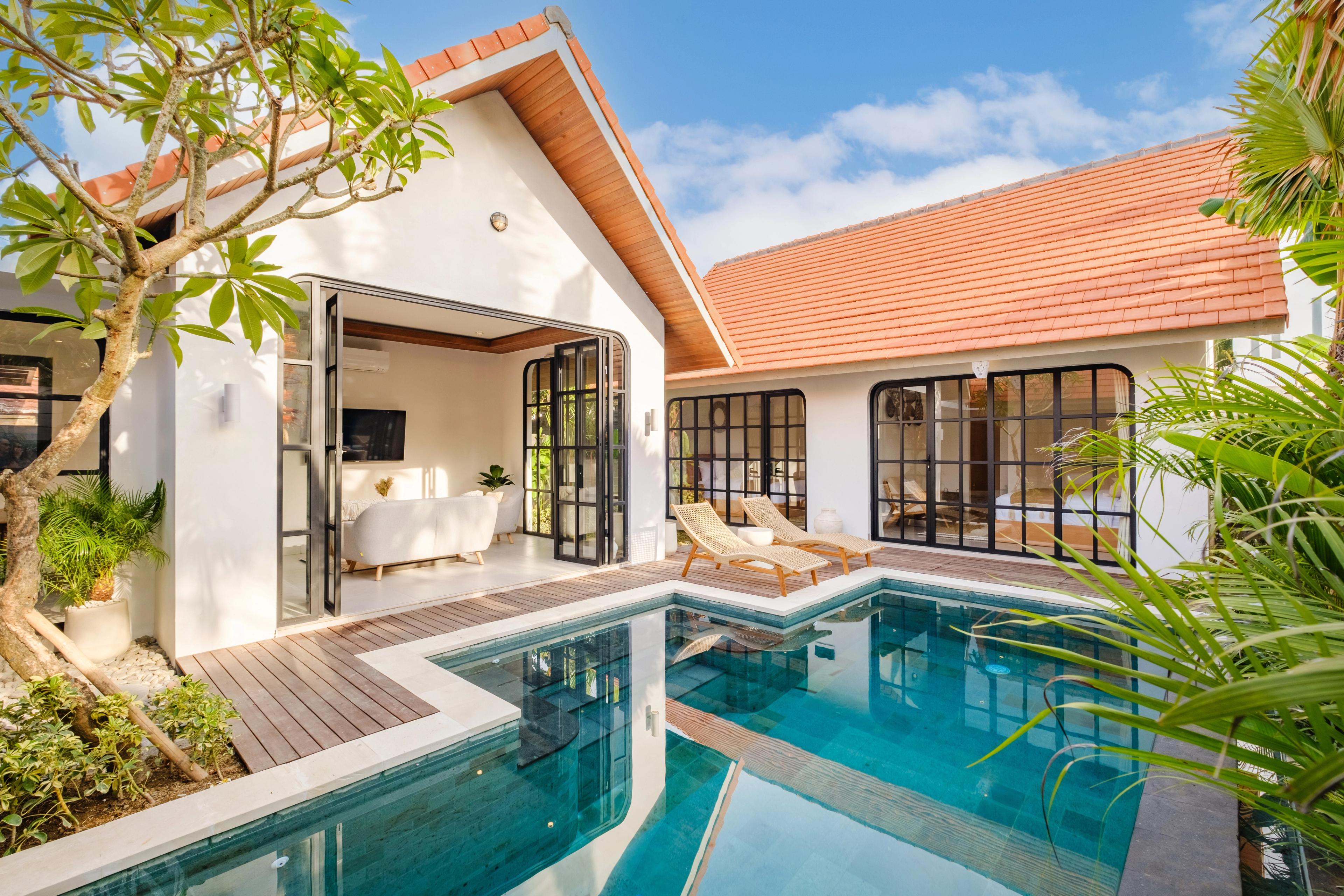
A private villa in Bali is the best base for a dive trip of this kind — not because it provides dive services, but because it provides the recovery infrastructure that multi-day diving requires. The pool at the end of a three-tank day, the villa chef who has a fish dinner and fresh juice ready when you arrive back, the ability to spread gear across a terrace and have it dry by morning, and the quality of sleep that a private, quiet environment provides between dive days. OriVista manages villas across south Bali's most accessible areas for day trips to Nusa Penida, and our concierge team connects guests with the reputable dive operators who work the northeast coast and northwest sites. Explore OriVista's villa collection for dive-focused trips to Bali and inquire about availability.