Introduction
Bali has been on the digital nomad conversation since before the phrase was common. The island has absorbed the category, evolved past its early-stage hostel-and-coworking model, and arrived in 2026 with a remote work infrastructure — reliable connectivity, serious coworking options, a visa structure designed to accommodate extended stays, and a density of good restaurants and productive café environments — that places it among the world's most genuinely functional bases for location-independent work. The question is no longer whether Bali works for remote workers. It is whether the specific version of Bali you are planning for is the one that works for you.
This Bali digital nomad guide 2026 covers the version you need to know before you arrive: the realistic connectivity picture, the visa options that matter, the areas that suit different working styles, the accommodation decision that has the biggest impact on daily productivity, and the lifestyle realities that make a one-month stay in Bali genuinely worth the planning. This is for the remote worker who has been here or is ready to stop planning and actually come.
Why Digital Nomads in Bali in 2026 Choose the Island Over Every Alternative
Ready to experience Bali?
52 luxury villas. Best rate guaranteed. Free beach club access when you book direct.
BOOK →The category has matured. The locations that digital nomads choose for extended stays in 2026 are no longer the ones with the cheapest coworking and the most Instagram-friendly cafés — they are the ones that provide a stable, high-quality daily existence alongside the work environment. Bali competes on every dimension of this more demanding standard.
The structural advantages that keep Bali at the top of the list:
- Time zone — UTC+8 covers the working hours of Singapore, Hong Kong, Japan, and most of Southeast Asia without night shifts. Australian east coast overlap is strong. London and European hours require early morning or evening work but are manageable. US time zones are challenging but workable for async teams.
- Cost efficiency — A genuinely comfortable, well-supported month in Bali — private villa with reliable Wi-Fi, daily restaurant meals, occasional beach club and travel days — costs USD $3,000–5,000 for a single professional or couple. Equivalent quality of life in Singapore, Tokyo, or Sydney costs two to three times more.
- Lifestyle density — Within a 30-minute radius from most Canggu or Seminyak bases, you have world-class surf, excellent food from IDR 30,000 to USD $80 a meal, a wellness infrastructure (yoga, meditation, spa) that exists nowhere else at this density, and a social community of peers that actively reduces the isolation risk that makes remote work difficult in less connected locations.
- Cultural depth — Bali is not a generic city. The temple ceremonies that happen weekly in every village, the rice terraces that are visible from the road between coworking spaces, the specific quality of the light at 6 AM over the gorge in Ubud — these are the elements that make a month in Bali more memorable than a month in a functional but characterless digital nomad hub.
- Recoverability — Bali operates at a restorative pace. The specific combination of warm climate, natural beauty, and Balinese hospitality produces the physical and psychological recovery that makes a longer working stay sustainable rather than depleting. Remote workers who have used Bali as a base consistently report returning to higher productivity than before the stay.
Bali is not a compromise between work and lifestyle. It is the specific place where people who take both seriously have converged, because it provides both at a level that most other locations cannot.
Bali Connectivity and Coworking Spaces Guide: The Realistic Picture
The connectivity question is the one that determines whether a Bali remote work base is viable for your specific work requirements. The honest picture: Bali's connectivity in 2026 is significantly better than its reputation from five years ago, and significantly more variable than the best-case presentations would suggest.
General connectivity:
4G mobile data through Telkomsel, XL, and Smartfren provides reliable connectivity across most of Canggu, Seminyak, and Ubud. Speeds of 20–50 Mbps are achievable on a good 4G connection with a local SIM card (IDR 50,000–150,000 for a month of data). Fibre broadband is available through select villa providers and coworking spaces, with speeds of 100 Mbps+ at the better-equipped venues. The connectivity gap: power outages of 30 minutes to several hours occur regularly, particularly during wet season. A UPS (uninterruptible power supply) or a coworking space with backup power is important if your work requires constant uptime.
The best coworking spaces in Bali by area:
Canggu has the densest coworking infrastructure on the island: Dojo Bali (one of the oldest and most established, daily and monthly memberships, reliable fast Wi-Fi, good community), Outpost Canggu (premium finish, meeting rooms, reliable fibre, strong community events), and Nooks (quieter, more focused working atmosphere, excellent for solo heads-down work). In Seminyak: Outpost Seminyak provides a more polished, quieter workspace than Canggu's higher-energy environment. In Ubud: Outpost Ubud is set in rice terraces and remains the most atmospherically distinctive coworking space on the island — the productivity-to-scenery ratio is genuinely extraordinary. For the digital nomad whose work requires reliable, high-capacity broadband, a dedicated coworking membership at a well-equipped space is the correct solution rather than relying on villa Wi-Fi for critical calls or uploads.
Café working culture:
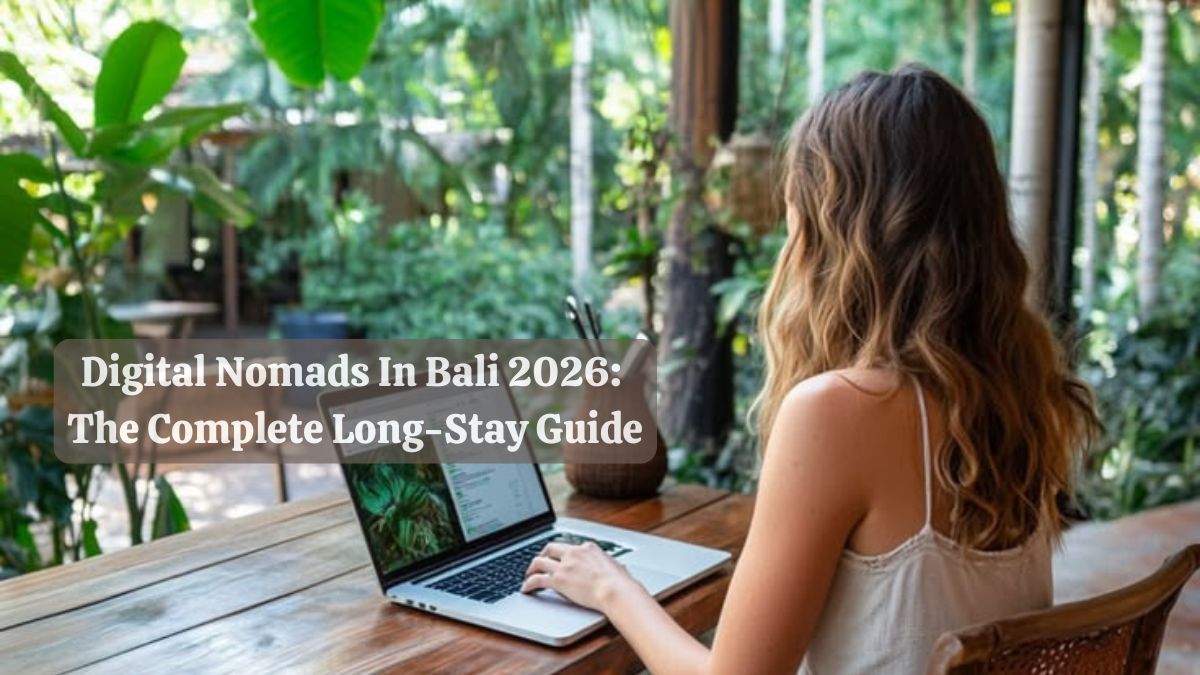
Bali's café-as-workspace culture is among the most developed in the world. Canggu has multiple venues with specifically remote-worker-optimised layouts, strong Wi-Fi, and an unspoken expectation that customers will spend several hours working rather than just consuming a single coffee. Ubud's cafés are more traditional in format but many have adapted to the laptop-working demographic. The practical issue: café Wi-Fi is adequate for email and light work but should not be relied on for video calls, large uploads, or latency-sensitive work. For those sessions, a dedicated coworking space or high-quality villa connection is preferable.
Insider note: the most reliable connectivity setup for a productive Bali month is a three-layer approach — villa Wi-Fi for morning sessions (test the speed on arrival; good managed villas have this as a service consideration), Telkomsel 4G SIM as a backup and for mobile working, and a coworking day pass or membership for calls and critical uploads. OriVista confirms Wi-Fi speeds for every villa in the portfolio before recommending them for long-stay remote workers.
Best Areas in Bali for Digital Nomads: Matching the Location to Your Working Style
The area you choose for a Bali remote work base shapes the character of every working day — how you move between your accommodation and coworking spaces, what you do at the end of the working day, and what the background texture of the month looks like. Different areas suit different working styles and different versions of what 'a good day' looks like.
Canggu
The digital nomad capital of Bali and one of the highest-density remote worker communities in Asia. Batu Bolong, Berawa, and Pererenan streets are lined with cafés, coworking spaces, surf schools, and restaurants operating specifically for the international remote working demographic. Fast-paced, social, slightly chaotic on the roads, excellent for community building and peer connection. Best for: social remote workers, those who want to meet peers, surf-culture enthusiasts, people who benefit from the stimulation of an active neighbourhood. Not ideal for: those who need deep quiet focus, or who want a Balinese atmosphere rather than an international nomad hub.
Seminyak / Kerobokan
More polished and less frenetic than Canggu. The coworking infrastructure is less dense but the restaurant and lifestyle quality is higher. Quieter streets, more residential character, excellent walkable dining. Best for: remote workers who want a refined lifestyle alongside the work, couples where one partner wants the Bali experience and the other needs a productive environment, those who value quality of evening over quantity of social scene. The beach access is excellent and Potato Head / Ku De Ta are 20 minutes away.
Ubud
The most atmospheric and culturally rich base for remote work in Bali. Lower energy than the coast, cooler climate, extraordinary scenery, excellent food scene, and the most interesting cultural programming on the island. Coworking spaces (Outpost Ubud in particular) are excellent and are built for remote workers specifically. Best for: writers, designers, creative professionals, those who need contemplative space alongside productivity, remote workers on longer stays (2+ months) who want genuine cultural immersion. Not ideal for those who need daily surf or beach access.
Pererenan / Cemagi
The quieter western extension of Canggu, with a more residential and less tourist-dense character. Increasingly popular with remote workers who want Canggu's connectivity and community without its peak-day road congestion. Excellent villa availability at good rates. Best for: experienced nomads who know what they want and prefer to compose their own environment rather than live within an established scene.
The honest recommendation for a first extended Bali stay: Canggu for social remote workers who want to meet people and establish a community quickly; Seminyak for those who prioritise lifestyle quality over community density; Ubud for those who want genuine cultural immersion alongside their work. Any of the three provides the connectivity and working infrastructure required for serious remote work in 2026.
Digital Nomad Visa Bali 2026: The Visa Options That Actually Matter
The visa question is where the most confusion exists in the Bali remote work space, and the confusion is understandable — Indonesia has made several policy announcements about digital nomad visas that have not been fully implemented, and the gap between what has been announced and what is actually available at the immigration counter creates genuine uncertainty.
The practical landscape for remote workers in 2026:
- Visa on Arrival (VoA, 30 days, extendable once to 60 days): The default entry for most nationalities. Technically does not permit work of any kind, including remote work for overseas clients. The most common visa for shorter stays; most remote workers use it for 30–60 day work trips.
- B211A Social-Cultural Visit Visa (60 days, extendable to 180 days with local sponsor): The de facto long-stay pathway for most digital nomads. Does not officially permit work but enforcement against remote workers serving overseas clients has historically been limited. The most accessible pathway for stays of 1–6 months that most serious digital nomads use in practice.
- E33G Remote Worker Visa (up to 1 year, KITAS-linked): Indonesia's official remote worker permit for those earning a minimum of approximately USD $60,000/year (USD $5,000/month) from overseas clients. Approximately USD $600 fee, 5–10 working days processing. The legally clean option for those who qualify financially — no Indonesian clients permitted. The correct choice for anyone meeting the income threshold who wants genuine legal peace of mind for an extended stay.
The honest guidance: if you are arriving for 30–60 days on a VoA, understand the technical legal position and make an informed decision. If you are staying 2–6 months, the B211A is the practical pathway used by most remote workers in Bali. If you earn above USD $60,000/year and want a legally clean year-long base, the E33G is worth the USD $600 application cost. Get advice from a licensed Indonesian immigration consultant if your situation is complex.
Bali Long Stay Villa for Remote Workers: Why a Private Villa Outperforms Shared Accommodation
The accommodation decision for an extended Bali remote work stay is the decision that has the most impact on daily productivity, lifestyle quality, and the sustainability of the stay. For remote workers who have spent time in Bali on the traditional hostel-guesthouse-shared-villa model, the move to a private villa for an extended stay is consistently described as the upgrade that changes the experience entirely.
What a private villa provides for a remote worker that shared accommodation cannot:
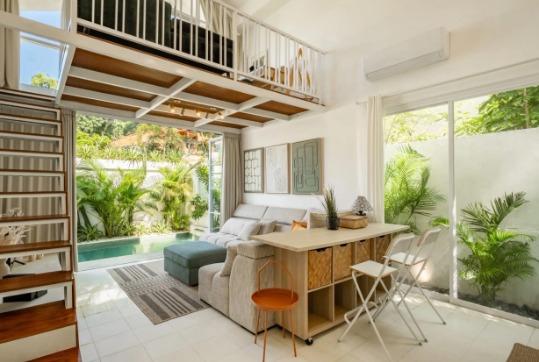
- A dedicated workspace that is yours — not a shared common area where other guests are watching TV or having conversations, not a hotel desk that was designed for laptops but not for working days. A private villa with a terrace table, garden Wi-Fi, and a pool visible from the working position is a work environment that most office-based employees would consider extraordinary.
- Connectivity that can be tested, improved, and relied on — in a private villa, the Wi-Fi router is yours and the bandwidth is not shared with a floor of other guests. OriVista confirms Wi-Fi specifications and can upgrade villa connections for long-stay guests whose work requires higher performance.
- A separation between working and non-working life within the same space — the ability to end the working day by walking ten metres from the terrace to the pool is not a trivial benefit. The transition between work and rest is one of the most practically important aspects of sustainable remote work, and a private villa makes it physically immediate rather than requiring travel.
- Stability and home base quality — the psychological benefit of having a space that is genuinely yours for the duration of the stay, where your belongings are not touched between days, where the kitchen can stock what you need, and where the afternoon nap is possible without navigating shared bathroom schedules.
- The hosting function — for remote workers who have client calls, team video meetings, or creative sessions that benefit from a professional-feeling background, a well-designed villa provides a setting that the coworking café and the hotel room both fail to match.
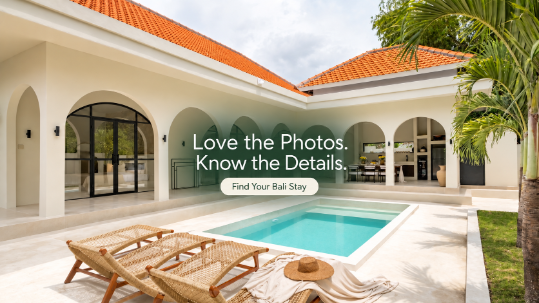
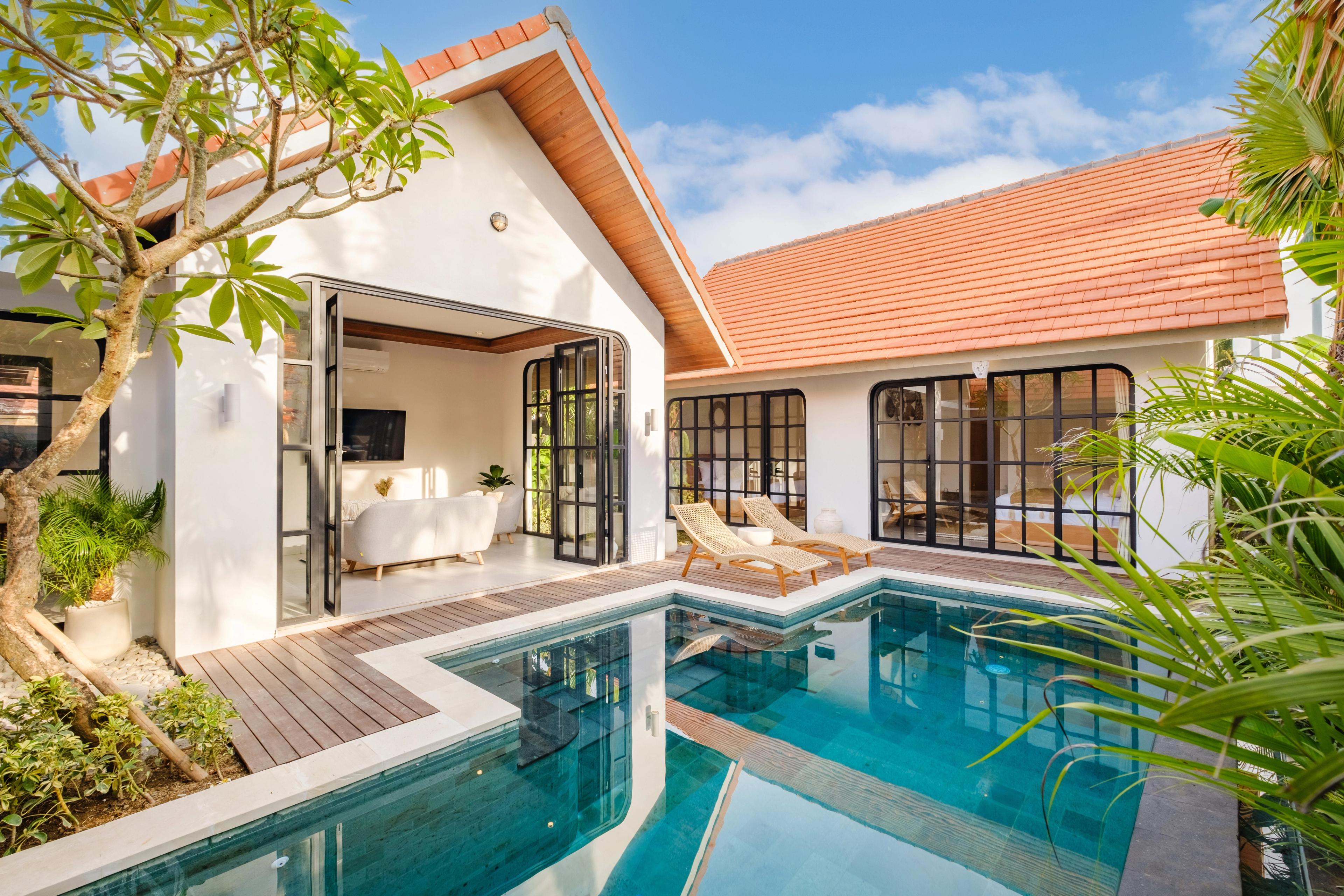
The cost comparison is closer than most remote workers expect. A month in a private pool villa in Canggu or Seminyak through OriVista for a long-stay guest ranges from USD $2,500–5,000, depending on the property and the season, comparable to or lower than a month in a quality hotel room, with dramatically more space, better connectivity options, and a working environment that an hourly rate hotel room cannot replicate.
The remote worker who has spent a month in a private villa in Bali never goes back to the shared accommodation model for an extended stay. The productivity, the comfort, and the quality of the daily existence are not comparable.
Living and Working in Bali Remotely: The Daily Reality That Makes the Month Worth It
The daily rhythm of a productive Bali remote work month, for the person who has set it up correctly, is one of the most enviable daily existences available to a location-independent professional. Not because Bali is paradise without problems — it has traffic, it has humidity, it has seasons — but because the combination of what it provides makes the working day and the living day genuinely excellent simultaneously.
The morning: quite early, before the roads get busy. A pool or a 10-minute drive to Batu Bolong for a pre-work surf, then breakfast at one of the extraordinary cafés that have been designed specifically for people who want to eat well while looking at something beautiful. Work session from the villa terrace or a nearby coworking space — the air is cool until around 10 AM and the light is extraordinary.
Midday: the productive window before the afternoon heat. Most experienced Bali remote workers front-load their working hours toward morning and use the 1–3 PM heat as a natural lunch and recharge period. The afternoon is for the pool, a creative walk, a temple visit, or a coworking social event.
Evening: where Bali really delivers. The quality of the restaurant scene in Canggu and Seminyak has reached a level that most capital cities cannot match at this price point. A USD $20–30 dinner can be excellent. A USD $60 dinner can be extraordinary. The beach clubs are available when you want them; the villa is available when you don't.
The practical realities worth knowing in advance: traffic in south Bali between 8–10 AM and 5–7 PM is genuinely slow on the arterial roads, and a motorbike or a reliable driver matters more than it does in a walkable city. The wet season (November–March) brings afternoon rain that typically clears within an hour but affects outdoor plans. Healthcare in Bali is good at the international hospital level (BIMC Kuta and Siloam Hospitals handle most foreign visitor needs), but seriously ill patients are typically medically evacuated; ensure your travel health insurance covers this.
For the remote worker who has been planning a Bali month and keeps finding reasons to delay: the planning gap between 'I'm going' and 'I'm there' is almost always smaller than it feels. Visa sorted in a day. SIM card at the airport. Villa confirmed through OriVista with Wi-Fi tested before arrival. Everything else the island provides itself.
Your Bali Month, Set Up Properly
Digital nomads in Bali in 2026 are choosing the island because it has matured into one of the world's most fully realised remote work destinations — not just a place with good coffee and a low cost of living, but a place with world-class connectivity infrastructure, a serious professional community, extraordinary lifestyle quality alongside the work, and accommodation options that match the work environment to the working style.
OriVista manages private pool villas across Canggu, Seminyak, Ubud, and Uluwatu with a specific understanding of what long-stay remote workers need: confirmed Wi-Fi speeds, ergonomic workspace configurations available on request, concierge connections to the local coworking spaces and immigration consultants who handle B211A and E33G applications, and the kind of stable, beautiful base that makes a one-month Bali stay extend to two or three. If you are planning your Bali remote-work month and want the right villa to anchor it, we would love to help you find the right one. Explore OriVista's long-stay villa collection for remote workers and enquire about monthly rates