
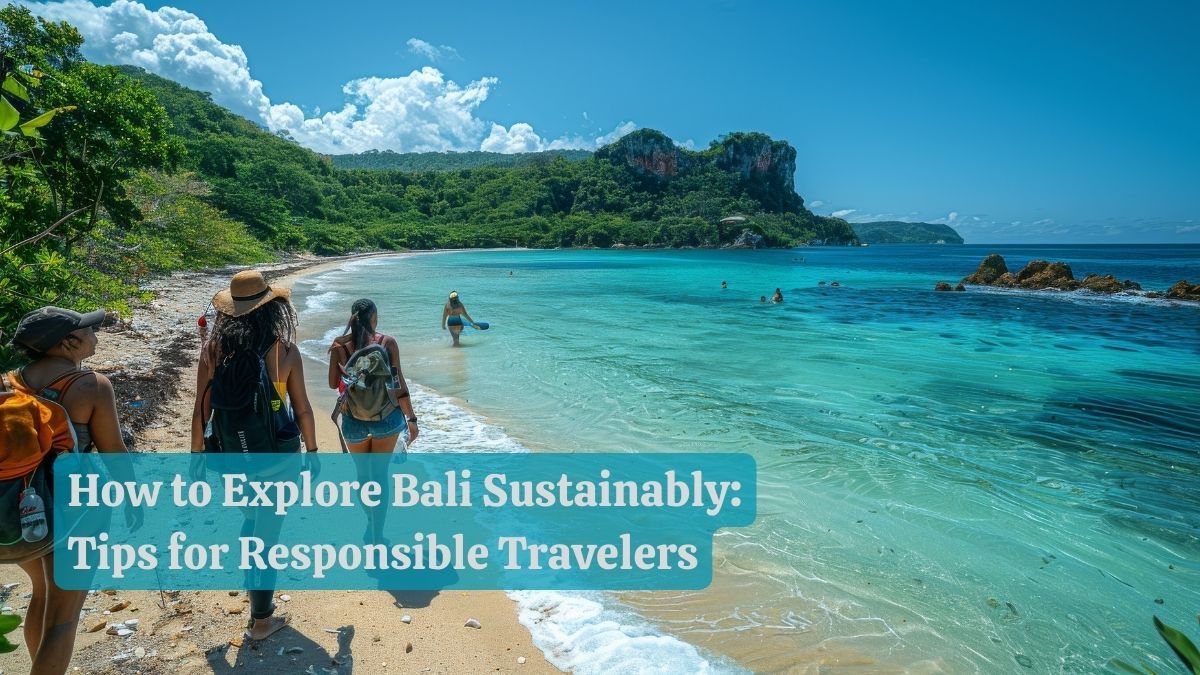
Introduction : Bali's Beauty Deserves to Be Protected
The world has long been enthralled by Bali for its terraced rice fields, historic temples, colourful ceremonies, and friendly locals, which combine to create an experience unmatched by any other place on the planet. However, given the millions of tourists that visit the island every year, responsible tourists cannot overlook the actual environmental and cultural pressures that the island faces.
The good news? In Bali, eco-friendly travel doesn't have to mean forgoing comfort or luxury. You can enjoy the Island of the Gods to the fullest while making a positive impact if you make a few well-considered decisions.
This guide is your one-stop shop for ethical travel to Bali, covering everything from where to stay and what to eat to how to engage with locals and preserve the environment.
1. Select Eco-Friendly Lodging
It's not as important where you sleep as you might think. Your choice of lodging has a direct impact on waste production, water use, local economies, and land preservation.
Stay in boutique hotels and villas run by locals.
Locally run villa management businesses put their earnings back into the Balinese community, in contrast to big international hotel chains that send their profits home. Your vacation money stays in the island's economy thanks to properties run by Bali-based businesses like OriVista, which collaborate closely with local employees, vendors, and craftspeople.
Seek out environmentally friendly methods.
Inquire about the use of solar panels, rainwater harvesting, and biodegradable toiletries at the time of booking. To cut down on plastic and food waste, many Bali villas have implemented composting initiatives, filtered water stations, and refillable dispensers.
Steer clear of resorts with a big footprint in environmentally delicate areas.
There are environmental hazards associated with riverbank properties in Ubud and cliff-edge developments in Uluwatu. Luxurious private villas with less of an impact on the environment can be found in well-known locations like Seminyak, Canggu, and Ubud town.
Pro Tip
Before making a reservation, find out from your villa manager about their sustainability policies. A straightforward response that covers topics like community partnerships, employee welfare, and water recycling is a powerful indication of sincere dedication.
2. Reduce Your Plastic Footprint
For good reason, Bali declared a plastic bag emergency in 2019. Because they wash into rivers, beaches, and the ocean, single-use plastics continue to be one of the island's most obvious environmental problems.
A reusable water bottle should be brought.
Although many villas, cafes, and eco-stations now have filtered water refill stations, tap water in Bali is still unsafe to drink. Using dozens of single-use plastic bottles on each trip can be avoided with a high-quality filter bottle or thermos.
Keep a reusable bag with you.
In 2019, Bali outlawed straws, single-use plastic bags, and Styrofoam. Even though most stores and markets have changed, it's still a good idea to have your own tote bag.
Throw away plastic cutlery and straws.
Nowadays, a lot of Bali eateries provide metal or bamboo straws, or none at all. Say "tidak pakai sedotan" (no straw, please) when placing an order for smoothies or fresh juices at nearby warungs.
Encourage companies that are actively cutting back on plastic.
Seek out eateries that use banana leaf packaging, coffee shops that filter their own water, and stores that sell goods in minimal packaging. Using your wallet to vote creates significant change.
3. Encourage the Regional Economy
Choosing to spend your money with local companies instead of global chains is one of the most effective ways to travel sustainably.
Dine at neighborhood eateries and warungs.
At a fraction of the cost of restaurants that cater to tourists, Bali's traditional warungs, which are tiny family-run restaurants, serve some of the island's most delicious and authentic cuisine. Local families are directly supported by the soto ayam, mie goreng, and nasi campur served at a nearby warung.
Visit your local market to shop.
Handcrafted goods made by Balinese artisans can be found in Seminyak's local boutiques, Ubud's Pasar Seni (Art Market), and traditional pasar (markets) throughout the island. It's normal to haggle, but be fair because the seller might value the few thousand rupiah you save more than you do.
Employ local tour guides.
Hiring certified Balinese guides guarantees that your money stays in the community while enhancing your experience with authentic local knowledge, whether you're diving the waters of Amed, trekking Mount Batur at sunrise, or exploring the rice terraces of Ubud.
Tip appropriately and liberally.
The Balinese values of hospitality (taksu) are at the heart of Bali's service culture. It is both appreciated and meaningful to tip your villa staff, drivers, and guides; a typical tip of 10–20% for excellent service has a big impact on local livelihoods.
4. Honour Balinese religion and culture
Bali is a deeply spiritual Hindu society with thousands of years of living tradition, making it more than just a tourist destination. Balinese families participate in temple ceremonies, make canang sari (flower offerings), and follow religious calendars that influence daily life rhythms.
At temples, wear modest clothing.
Wearing a sarong and sash is mandatory when visiting any Bali temple, be it Tanah Lot, Pura Besakih, or a local village shrine. For a nominal fee, these can typically be rented at temple entrances. Cover your knees and shoulders.
Don't disturb or step on offerings.
Offerings of canang sari that are positioned on the ground, on doorsteps, or in public spaces are considered sacred. Avoid going over or through them; instead, walk around them.
Before taking pictures of ceremonies, ask.
Balinese ceremonies are not entertainment; they are religious occasions. Always get permission before taking a picture, and pay attention to local cues about when to keep quiet or move away.
Be mindful of temple etiquette.
It is customary for women to be asked not to enter temple grounds while they are menstruating; this is a deeply held belief, not an insult. Observe the rules that are posted at each temple.
Learn a few Indonesian words. Simple expressions like "selamat pagi" (good morning), "permisi" (pardon me), and "terima kasih" (thank you) are warmly received and demonstrate your respect for the local way of life.
5. Select Conscientious Experiences with Wildlife and Nature
Overtourism and careless operators are seriously threatening Bali's natural beauty, including its rainforests and coral reefs. As a traveller, you have the ability to prevent or hasten the damage.
Avoid elephant rides and animal selfie attractions.
The animals at venues that provide "wild" animal encounters, elephant rides, or photo ops with drugged or chained animals are nearly always harmed. The morally right course of action is to support real wildlife sanctuaries that rescue and rehabilitate animals without ever using them for entertainment.
Select scuba divers and snorkelers who are responsible.
The coral reefs in Amed, Pemuteran, and Nusa Penida, Bali, are remarkable but delicate. Select PADI or SSI-certified operators who provide divers with reef protection training and enforce stringent no-touch rules.
Stay on marked trails.
Follow designated routes when hiking through Bedugul's botanical gardens, Sidemen's rice fields, or Munduk's waterfalls. Off-trail exploration accelerates erosion, disrupts wildlife, and harms root systems.
Reduce your carbon footprint.
The carbon cost of long-haul flights to Bali is high. Think about offsetting through accredited initiatives like Gold Standard or directly funding reforestation initiatives in Bali through groups dedicated to restoring the island's forests.
6. Conserve Energy and Water
Due to rapid development and increased tourism, Bali, especially southern Bali, is experiencing an increasing shortage of water. Overdevelopment is putting stress on the island's traditional subak irrigation system, which is a cultural landscape recognized by UNESCO.
Cut down on the length of your showers.
Although it may seem easy, conserving water in a popular tourist destination adds up. Smart water monitoring systems are already being installed in many upscale villas to track and minimise usage.
Reuse linens and towels.
Choose not to have your linens changed every day if you are staying for several nights. This greatly lowers the amount of water and energy used during your visit.
When you leave your villa, turn off the air conditioning.
During peak season, Bali's electrical infrastructure frequently experiences strain. When thousands of visitors are involved, turning off the air conditioning when you leave your room, even for a few hours, significantly lessens the load.
If at all possible, use ceiling fans.
The evenings in Bali are naturally cool, especially in Ubud and the highlands. Ceiling fans are more than enough for a comfortable night's sleep and consume a fraction of the energy of air conditioning.
7. Take Your Time and Remain Put
Slowing down is arguably the most effective and pleasurable sustainable travel option. Spend more time in fewer locations rather than cramming five Bali destinations into seven days.
Traveling slowly lessens your environmental impact.
Staying longer in one location leads to fewer transfers, lower transportation emissions, stronger local ties, and a more genuine experience.
Spend the whole trip in a single villa.
For a week or two, renting a private villa gives you a real home base; you can learn about your neighbourhood, make friends with locals, find your favourite warung, and experience the rhythm of Balinese daily life instead of just witnessing it
Go to places that are less crowded.
Areas like Sidemen, Munduk, Amed, and Nusa Penida provide equally stunning experiences with significantly less crowd pressure on the environment and local communities, even though Seminyak and Kuta offer first-rate amenities.
8. Don't Leave Any Traces — and Maybe Do a Bit More
The bare minimum requirement for responsible travel is the "leave no trace" principle. The most influential travelers leave a better impression than when they arrived.
Take part in a community or beach cleanup.
Numerous groups in Bali organize frequent beach clean-ups, especially in Canggu, Seminyak, and Kuta, and encourage participation from tourists. It makes a difference to spend even thirty minutes gathering plastic on the beach.
Encourage NGOs and social enterprises.
The island's social and environmental issues are addressed by groups like the Bali Children's Foundation, the Bali Environmental Education Centre, and numerous community cooperatives. Local communities truly benefit from a small donation or volunteer day.
Talk to other travellers about responsible travel
. When responsible travellers influence other travellers, the impact multiplier is at its strongest. A thoughtful social media post or a casual conversation at the villa pool can change the perspective of dozens of people.
Luxury and Eco-Friendly Travel Are Not Mutually Exclusive
The idea that sustainability necessitates sacrifice is among the most pervasive misconceptions in travel. The opposite is frequently true in Bali. The most genuine, significant, and unforgettable experiences are also the most sustainable: a sunrise hike up Mount Batur led by a local who knows every trail, a private dinner made by your villa's Balinese cook using ingredients from the morning market, and an afternoon spent witnessing a temple ceremony in a village that seldom sees tourists.
Our villas at OriVista are run with a great deal of respect for the environment that makes Bali unique, our employees, and Balinese culture. We think that responsible travel and luxury hospitality go hand in hand, and that our guests always choose to travel in ways that honour the island they have grown to love when they are given the proper advice.
Conclusion: Don't just be a tourist; be a traveller.
In the end, sustainable travel in Bali is about changing one's perspective from taking in the island's beauty to actually interacting with it. You become a part of the island's story rather than merely a visitor when you choose local, give liberally, walk carefully, and approach Balinese culture with respect and curiosity.
Every visitor to Bali receives enormous benefits. Giving something back is the most satisfying way to get that gift.