Introduction
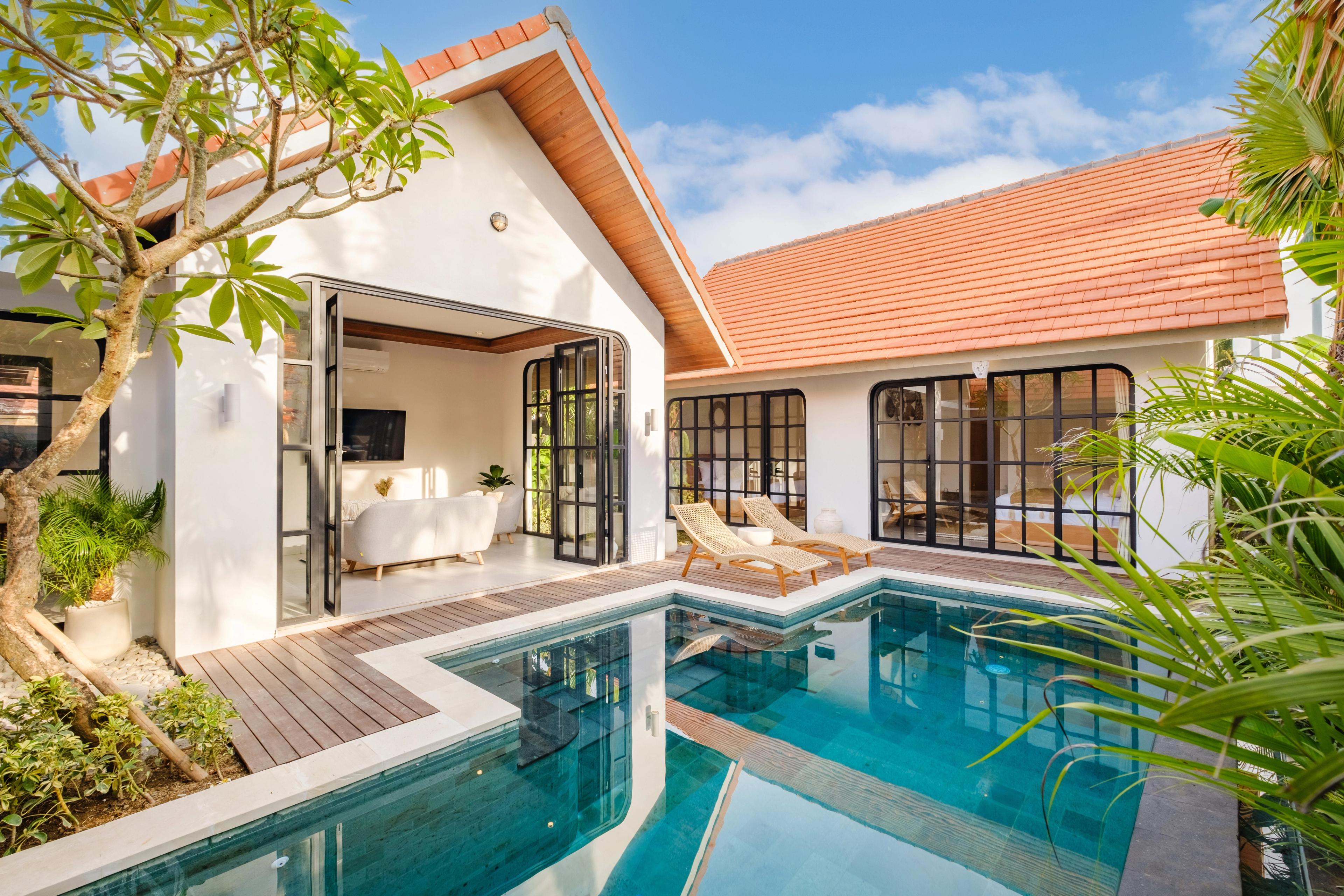
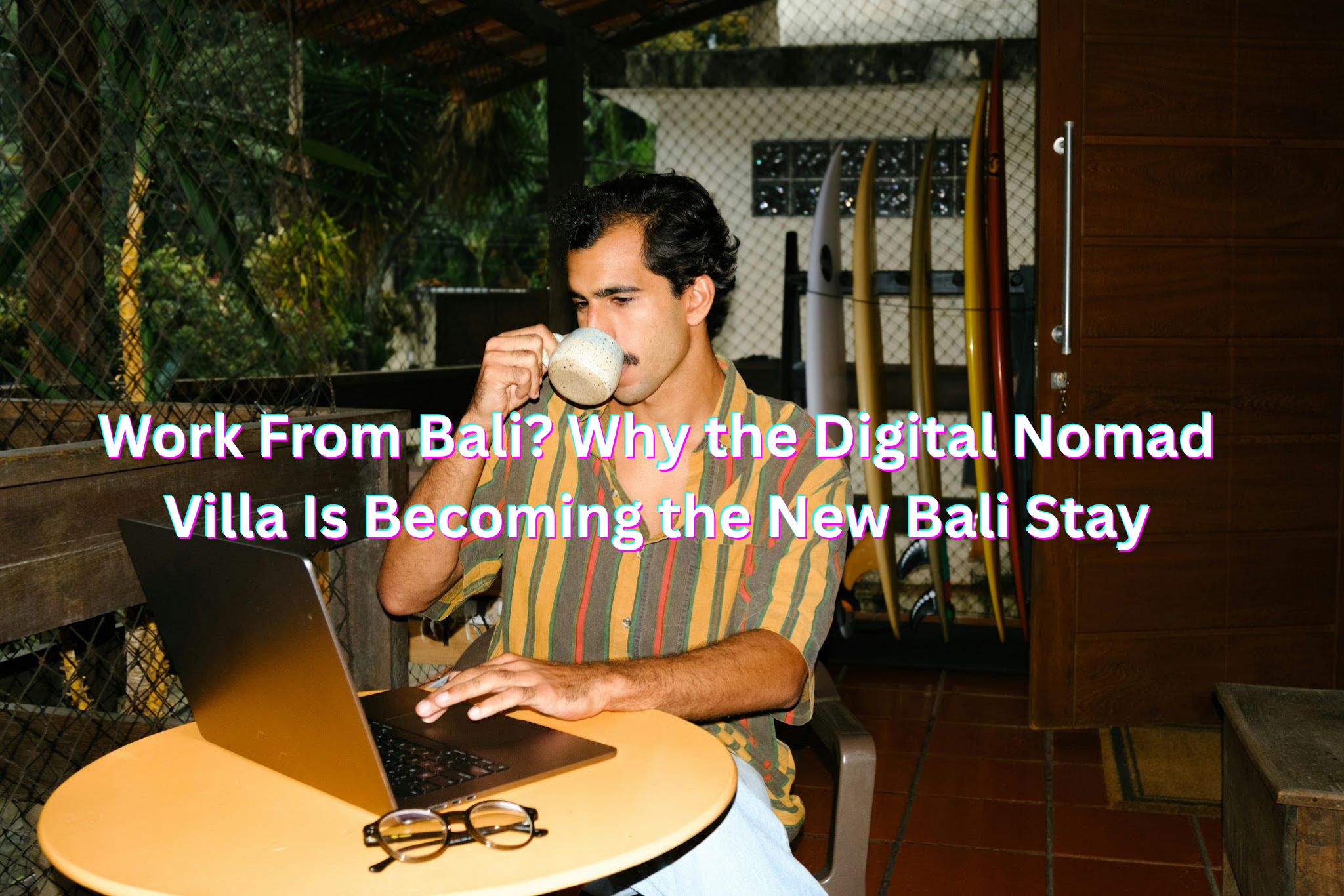
Imagine this. 8:30am, coffee in hand, laptop open. You finish your first meeting, close the laptop, and walk about twelve steps before getting into your private pool.
This is working from Bali — and it has become less about finding a desk with decent Wi-Fi and more about finding a place where work and life actually fit together.
What makes a villa work-ready for digital nomads?
Ready to experience Bali?
52 luxury villas. Best rate guaranteed. Free beach club access when you book direct.
BOOK →A work-ready Bali villa needs five things: fast and reliable Wi-Fi with a backup connection, a proper desk and chair rather than a dining table, comfortable air-conditioned indoor space for hot afternoons, enough privacy to take calls without background noise, and a location close enough to cafés and coworking spaces to leave the house when you need to. Pool and view are the easy part. The rest is what determines whether a month of working actually functions.
Most villas photograph beautifully and were never designed for someone to sit at a screen in for eight hours. The gap between the two is where long stays go wrong.
Bali isn't just a holiday destination anymore
Bali has been a favourite among digital nomads for years, but the lifestyle around it has changed. People are no longer looking mainly for a cheap place to stay for a few weeks. They are looking for better living.
That means reliable connectivity, a comfortable workspace, privacy, wellness, good food and access to cafés and community — while still having everything that makes Bali feel like Bali. Demand for work-ready accommodation has grown accordingly, particularly in Canggu, Berawa, Pererenan and Ubud.
If you want the honest version of what daily life here actually looks like — costs, visas, community, the parts that don't appear on Instagram — our Bali digital nomad guide for 2026 covers it in detail.
The work-from-villa checklist
A good digital nomad villa needs more than a pretty pool. These are the things worth asking about before you commit to a month.
Fast, reliable Wi-Fi
Because "sorry, you froze" gets old very quickly. Ask for the actual speed rather than a yes or no, and ask whether there is a backup — a mobile hotspot on a second network is what saves a client call when the fibre goes down, which in Bali it occasionally does. If your work involves video calls, upload speed matters more than download.
A proper workspace
Not the corner of a dining table you share with your breakfast. A desk at the right height, a chair you can sit in for four hours, and a power socket within reach. Outdoor desks look wonderful in photographs and are unusable in glare and humidity by eleven in the morning — a shaded, air-conditioned indoor spot is what you'll actually use.
Comfortable living space
Nobody wants to work eight hours from a hard wooden chair. On a long stay you also want a kitchen, laundry, and somewhere to leave your setup out overnight without packing it away.
Privacy
Sometimes the best coworking space is the one where nobody else is around. This is where the enclosed villa compound genuinely outperforms a room — no corridor noise, no housekeeping trolley outside during a call, no shared pool at capacity. OriVista villas have no resident staff for exactly this reason, with housekeeping visiting daily and the concierge team on WhatsApp rather than on site.
A location that works
Close enough to cafés, restaurants, beaches and local life, far enough to switch off. This is the single decision that most affects how the month goes.
Where to base yourself for remote work in Bali
Canggu and its neighbouring areas suit most remote workers, with the strongest café and coworking density on the island. Ubud suits those who want quiet and wellness over social density. The choice mainly comes down to whether you want people around you during the week or at weekends.
How the main areas compare
- Canggu and Berawa — Cafés, coworking, community and beaches. Trade-off: the busiest traffic and the most crowded streets on the island.
- Pererenan — The same access with quieter streets and good surf. Trade-off: slightly fewer places to work from.
- Ubud — Wellness, yoga, cooler air and easier focus. Trade-off: fewer beaches, longer drives and a smaller nomad scene.
- Uluwatu — Surf, clifftops and space. Trade-off: long drives to most things and a thinner café scene.
- Seminyak — Restaurants, gyms and city-adjacent convenience. Trade-off: less nomad community than Canggu.
Weekends are where the location choice pays off. Uluwatu is under an hour from Canggu for a Saturday of surf and cliffs, Nusa Penida works as a full day out from Sanur, and the dive sites around Amed and Tulamben are worth an overnight rather than a day trip.
The rise of bleisure travel
There's a category emerging between business travel and holidays: bleisure travel. The idea is simple — work doesn't have to mean giving up the holiday.
You might work Monday to Thursday from Bali and extend the trip into a long weekend. Or stay a month, work remotely during the week, and explore the island on days off. Bali's combination of connectivity, lifestyle, wellness and accommodation makes it unusually well suited to this pattern.
The practical constraint is time zones. Bali runs on WITA, eight hours ahead of UTC — comfortable for anyone working with Australia or Asia, workable with Europe if you start late, and demanding if your team is on US Pacific time, which puts most meetings well into your evening. Worth checking against your actual calendar before booking a month.
Why villas make sense for long stays
A hotel room feels perfect for three nights. After three weeks it doesn't. You want a kitchen, a living room, laundry, a pool, somewhere to take a call, and somewhere to leave the laptop without packing everything away every morning.
That's where villas become interesting. You're not simply booking accommodation in Bali — you're creating a temporary home. We've compared the two formats properly in villa vs hotel in Bali, and the gap widens the longer you stay.
For stays beyond a month, rates change shape entirely: monthly and multi-month pricing is a different conversation from nightly rates, and our long-term rental options are built for exactly that. If you want the slower version of this trip — fewer bases, longer stays, quieter areas — that pattern is covered in Bali travel trends for 2026.
Work from Bali. Live in Bali. Don't just visit Bali.
The best part of the setup is what's missing from it. When the workday ends there's no commute. Close the laptop, walk outside, and you're already on holiday.
Looking for a villa that works as hard as you do? Explore OriVista's villa collection across Canggu, Seminyak, Ubud and Uluwatu, and talk to our concierge team about connectivity, workspace and monthly rates before you book. Book direct for the best rate and OriCircle partner benefits from your first night.